
Over half of American e-commerce startups run into costly support bottlenecks before they ever grow large enough to hire full-time help. For founders and marketing managers who need to build trust quickly but lack technical know-how, choosing the right AI chatbot can change everything. This guide shows how affordable AI tools let startups deliver fast, personalized help to customers, all without complicated setup or massive budgets.
Table of Contents
- AI Chatbots For Startups Explained
- Types Of Chatbots And Key Features
- Real Use Cases In E-Commerce Startups
- Integrating AI Chatbots Without Coding
- Risks, Costs, And Common Mistakes
Key Takeaways
| Point | Details |
|---|---|
| AI Chatbots Enhance Efficiency | Startups can leverage AI chatbots for 24/7 customer support, reducing operational costs and improving engagement. |
| Diverse Chatbot Types | Different chatbot types, including Rule-Based and AI-Powered, cater to various business needs, allowing startups to choose the most suitable solutions. |
| No-Code Integration | Modern platforms enable startups to integrate chatbots without coding, facilitating rapid deployment through user-friendly interfaces. |
| Strategic Risk Management | Implement robust risk management strategies to address challenges like AI bias and unexpected costs, ensuring effective chatbot deployment. |
AI Chatbots for Startups Explained
Artificial Intelligence (AI) chatbots represent a transformative technology enabling startups to scale customer support and engagement with unprecedented efficiency. According to recent research, AI chatbot adoption is rapidly expanding across diverse organizational settings, providing small businesses powerful tools to compete with larger enterprises.
At their core, AI chatbots are sophisticated software programs designed to simulate human conversation through natural language processing. These intelligent systems can understand customer inquiries, provide instant responses, and learn from interactions to improve their communication over time. For early-stage startups, this technology offers several critical advantages:
- Instant Customer Support: 24/7 availability without hiring additional staff
- Cost Efficiency: Reducing operational support expenses
- Scalable Communication: Handling multiple customer interactions simultaneously
- Data Collection: Gathering valuable insights about customer needs and preferences
The global market for chatbot technology continues to expand rapidly, with significant worldwide investment in conversational AI startup solutions. Small businesses can now leverage these advanced technologies to create more responsive, intelligent customer engagement strategies without massive infrastructure investments.
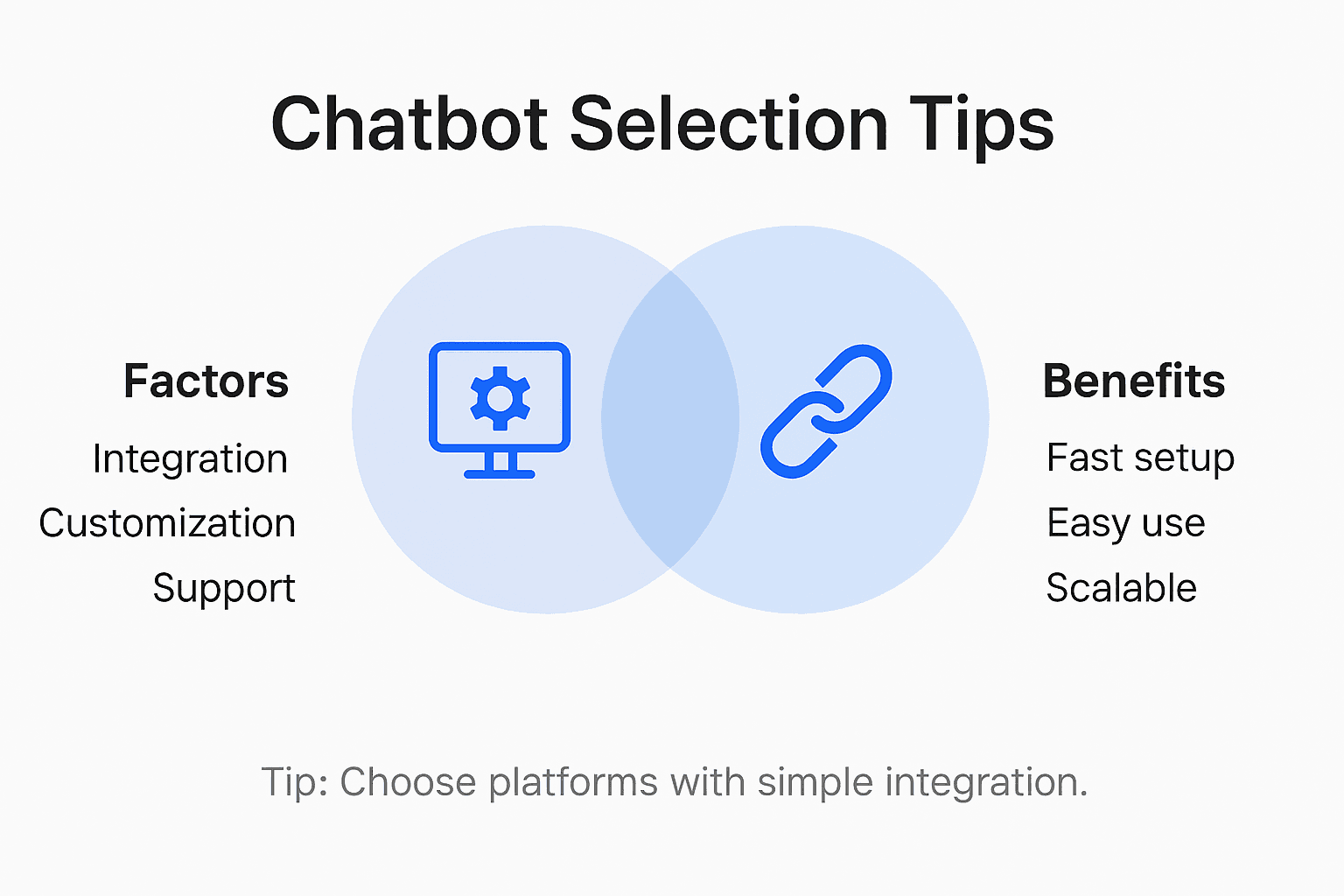
Quick Tip: When selecting an AI chatbot for your startup, prioritize platforms offering easy integration, customization options, and clear analytics dashboards to maximize your return on investment.
Types of Chatbots and Key Features
The world of AI chatbots encompasses a diverse range of technologies, each designed to address specific business needs. Comprehensive research reveals multiple chatbot architectures with unique interaction capabilities, enabling startups to select solutions precisely matched to their customer engagement strategies.
Chatbots can be categorized into several primary types:
- Rule-Based Chatbots: Operate through predefined conversation flows
- AI-Powered Chatbots: Utilize machine learning for dynamic interactions
- Hybrid Chatbots: Combine rule-based and AI-driven approaches
- Voice-Enabled Chatbots: Support spoken language interactions
Large language model technologies have dramatically expanded chatbot functionalities, enabling more sophisticated natural language understanding and contextual responses. Modern AI chatbots now feature advanced capabilities like sentiment analysis, intent recognition, and seamless integration with existing business systems.
Key features that distinguish high-performance chatbots include multilingual support, customizable conversation flows, real-time learning algorithms, and robust analytics dashboards. These technologies empower startups to create intelligent, responsive customer interaction platforms without significant infrastructure investments.
Here’s a summary of how different chatbot types meet common startup needs:
| Chatbot Type | Best For | Key Strength | Limitation |
|---|---|---|---|
| Rule-Based | Simple FAQs | Predictable responses | Limited flexibility |
| AI-Powered | Complex conversations | Learns from users | Needs data to train |
| Hybrid | Broad use cases | Balanced automation | Requires management |
| Voice-Enabled | Hands-free support | Natural experience | Needs speech tech setup |
Pro Tip: When evaluating AI chatbot solutions, prioritize platforms offering flexible API integrations and comprehensive training capabilities to ensure long-term scalability and performance.
Real Use Cases in E-Commerce Startups
Case studies of AI chatbot deployments in e-commerce startups demonstrate remarkable transformations in customer interaction and operational efficiency, revealing powerful strategies for emerging online businesses. These intelligent systems have become game-changers for startups seeking scalable customer support solutions without massive infrastructure investments.
Typical e-commerce chatbot applications include:
- Product Recommendation: Personalized shopping suggestions based on customer preferences
- Order Tracking: Real-time updates on shipping status and delivery information
- Customer Support: Instant resolution of common inquiries and technical issues
- Returns and Exchanges: Automated processing of return requests
- Abandoned Cart Recovery: Proactive engagement to re-engage potential customers
Global funding trends highlight the increasing investment in conversational AI technologies for online retail startups, underscoring their critical role in modern e-commerce strategies. Advanced AI chatbots now integrate seamlessly with inventory management systems, payment platforms, and customer relationship management tools, creating comprehensive support ecosystems.

Successful implementation requires strategic alignment between chatbot capabilities and specific business objectives. E-commerce startups can leverage these technologies to provide 24/7 customer support, reduce operational costs, and create more personalized shopping experiences that drive customer loyalty and repeat purchases.
Compare common e-commerce chatbot functions and their business impact:
| Application | User Experience Benefit | Startup Value |
|---|---|---|
| Product Recommendation | Personalized suggestions | Higher conversion rates |
| Order Tracking | Instant delivery updates | Fewer support requests |
| Returns & Exchanges | Streamlined process | Reduced manual workload |
| Cart Recovery | Timely reminders | Increased sales |
Pro Tip: Implement a hybrid chatbot approach that combines automated responses with easy human handoff to ensure comprehensive and flexible customer support.
Integrating AI Chatbots Without Coding
Modern AI technologies have dramatically simplified chatbot deployment for non-technical startup founders, eliminating the traditional barriers of complex programming and technical expertise. Entrepreneurs can now leverage user-friendly platforms that enable rapid chatbot integration through intuitive interfaces and pre-configured templates.
Key strategies for no-code chatbot implementation include:
- Drag-and-Drop Interface: Visual design tools for conversation flow
- API Integration: Seamless connections with existing business systems
- Template Libraries: Pre-built conversation scenarios
- Natural Language Training: Machine learning models that adapt to specific business contexts
- Customization Options: Branding and design personalization
User-friendly AI tools now provide incremental setup processes that make advanced chatbot deployment accessible to small businesses, requiring minimal technical background. These platforms offer step-by-step guidance, allowing startup founders to create sophisticated customer support systems without writing a single line of code.
Successful no-code chatbot integration involves understanding your specific business requirements, selecting appropriate templates, and continuously refining the conversational experience based on user interactions. By focusing on clear communication goals and leveraging intuitive platforms, startups can quickly deploy intelligent support systems that enhance customer engagement.
Pro Tip: Start with a basic chatbot template and incrementally improve its performance by analyzing real user interactions and gradually expanding its capabilities.
Risks, Costs, and Common Mistakes
AI chatbot implementations for startups involve complex challenges that require careful strategic planning and risk management, with potential pitfalls that can significantly impact operational effectiveness and financial investment.
Common risks and mistakes in AI chatbot deployment include:
- Bias in AI Responses: Unintentional prejudiced or inappropriate communication
- Overreliance on Automation: Neglecting human oversight and intervention
- Limited Context Understanding: Misinterpreting complex customer inquiries
- Unexpected Implementation Costs: Hidden expenses beyond initial setup
- Data Privacy Vulnerabilities: Potential security and compliance risks
Ethical considerations and technical limitations present significant challenges for startups seeking to integrate AI-powered conversational technologies, requiring sophisticated approaches to mitigate potential errors and maintain customer trust. Successful implementation demands a nuanced understanding of AI capabilities and strategic human intervention.
Startups must develop comprehensive strategies that balance technological innovation with robust risk management. This includes regular performance monitoring, continuous training of AI models, establishing clear escalation protocols for complex interactions, and maintaining transparency about the AI’s capabilities and limitations.
Pro Tip: Implement a hybrid support model that combines AI chatbot interactions with accessible human support channels to ensure comprehensive and reliable customer service.
Transform Your Startup’s Customer Support with AI Chatbots
Startups often struggle with providing fast and scalable customer support while managing cost and complexity. This article highlights key challenges like the need for instant responses, seamless human handoff, and easy no-code integration—issues that can stall growth and frustrate customers. At ChatPirate.io, we understand these pain points and offer AI-powered chatbots specifically designed to enhance engagement without requiring technical skills or heavy infrastructure.
Experience 24/7 instant support, customizable conversation flows, and powerful analytics dashboards that grow with your business. Our platform integrates effortlessly with popular website builders like WordPress and Shopify to help startups automate order tracking, lead qualification, and more. Say goodbye to overreliance on human agents and the risk of missing critical customer moments.
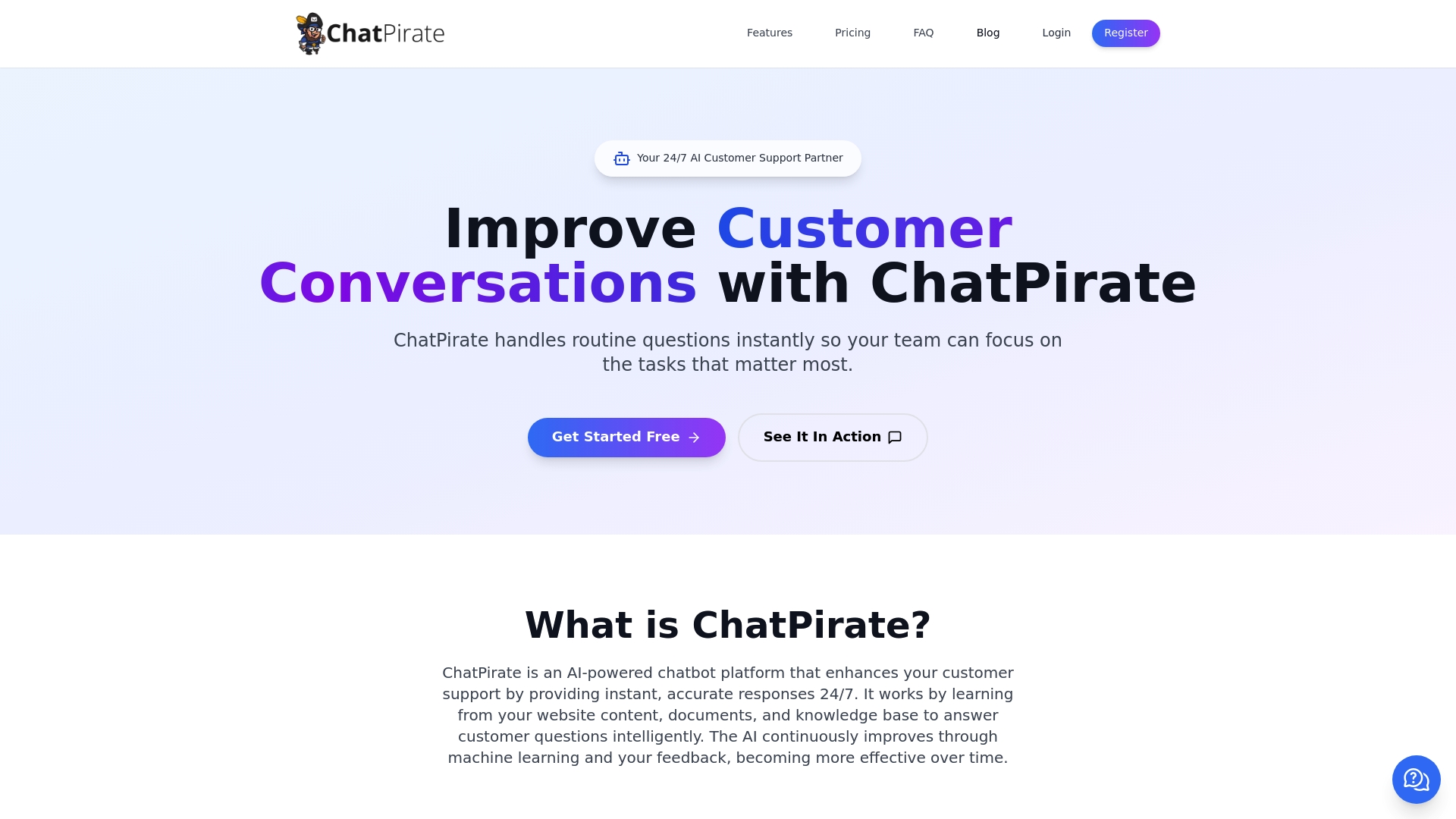
Ready to boost customer satisfaction and reduce support costs now? Explore how ChatPirate’s flexible AI chatbot solutions align perfectly with your startup goals in AI Chatbots for Startups. Don’t wait to level up your customer experience. Visit ChatPirate.io and start your free trial today to see the difference intelligent automation can make.
Frequently Asked Questions
What are AI chatbots and how do they benefit startups?
AI chatbots are sophisticated software programs that simulate human conversation using natural language processing. They benefit startups by providing instant customer support, improving cost efficiency, handling multiple interactions simultaneously, and collecting valuable data on customer preferences.
What are the different types of AI chatbots available for startups?
The main types of AI chatbots include rule-based chatbots, AI-powered chatbots, hybrid chatbots, and voice-enabled chatbots. Each type serves different needs: rule-based chatbots follow predefined flows, AI-powered chatbots learn from interactions, hybrid chatbots combine both approaches, and voice-enabled chatbots support spoken interactions.
How can startups integrate AI chatbots without technical expertise?
Startups can integrate AI chatbots using user-friendly platforms that feature drag-and-drop interfaces, template libraries, and API integrations. These platforms allow non-technical founders to quickly deploy sophisticated chatbots without any coding experience.
What are the common risks and mistakes to avoid when implementing AI chatbots?
Common risks include bias in AI responses, overreliance on automation, limited context understanding, unexpected implementation costs, and data privacy vulnerabilities. To mitigate these risks, startups should focus on regular performance monitoring, continuous training, and maintaining a balance between AI interactions and human support.
Leave a Reply