
Over 80 percent of American online shoppers expect instant responses when interacting with digital stores. This demand for real-time answers and personalized attention is shaping the way e-commerce managers think about customer engagement tools. Whether you’re serving American customers or buyers from around the world, this guide unpacks how AI chatbots are redefining online retail with smarter support, flexible automation, and advanced conversational experiences that drive satisfaction and growth.
Table of Contents
- Defining Chatbots In E-Commerce Environments
- Types Of E-Commerce Chatbots And Capabilities
- Key Features Powering Customer Experience
- Automation, Order Support, And Lead Generation
- Financial Impact, Risk, And Cost Reduction
- Common Implementation Mistakes To Avoid
Key Takeaways
| Point | Details |
|---|---|
| Importance of Chatbots | Chatbots are vital digital assistants in e-commerce that enhance customer interactions and streamline support services through AI and natural language processing. |
| Types of Chatbots | E-commerce chatbots can be rule-based or AI-powered, each serving distinct needs; rule-based chatbots handle simple tasks while AI-powered chatbots manage complex interactions and personalized experiences. |
| Financial Benefits | Implementing chatbots can significantly reduce operational costs and enhance customer satisfaction by delivering 24/7 support and automating repetitive tasks. |
| Implementation Best Practices | Choosing the right chatbot solutions and ensuring continuous training are crucial for maximizing their effectiveness and maintaining customer trust. |
Defining Chatbots in E-Commerce Environments
Chatbots in e-commerce represent sophisticated digital assistants powered by artificial intelligence designed to simulate human conversation and support customer interactions within online retail environments. These intelligent systems leverage natural language processing to understand and respond to customer queries, provide product recommendations, and facilitate seamless shopping experiences.
Academically defined, chatbots are virtual agents that automate customer service functions through conversational interfaces. Conversational commerce research demonstrates that these AI-powered tools can simulate human dialogue while delivering personalized product recommendations and enhancing purchasing experiences. They operate across multiple communication channels including website chat windows, messaging platforms, and mobile applications.
Modern e-commerce chatbots perform multiple critical functions beyond basic customer support. These advanced systems can handle complex tasks such as product searches, price comparisons, order tracking, and even personalized marketing recommendations. By integrating machine learning algorithms, chatbots continuously improve their interaction capabilities, adapting to specific customer preferences and business requirements.
Pro tip: When implementing an e-commerce chatbot, focus on creating a conversational flow that feels natural and provides genuine value to customers rather than using rigid, scripted responses.
Types of E-Commerce Chatbots and Capabilities
E-commerce chatbots are sophisticated digital solutions categorized primarily into two fundamental types: rule-based and AI-powered conversational interfaces. Technical research reveals distinct architectural differences between these chatbot frameworks, each offering unique capabilities for online retail customer engagement.
Rule-based chatbots operate through predefined scripts and decision trees, providing structured interactions with limited flexibility. These systems excel at handling straightforward customer inquiries like order status checks, shipping information, and basic product recommendations. They follow strict algorithmic paths, responding to specific keywords and maintaining consistent, predictable communication patterns.
In contrast, AI-powered chatbots represent more advanced technological solutions. Leveraging machine learning and natural language processing, these intelligent systems can understand context, interpret complex customer requests, and generate dynamic, contextually appropriate responses. They continuously learn from interactions, becoming more sophisticated over time and offering personalized shopping experiences that adapt to individual customer preferences and behaviors.
Here’s a quick comparison of rule-based and AI-powered chatbots in e-commerce:
| Attribute | Rule-Based Chatbot | AI-Powered Chatbot |
|---|---|---|
| Operation Method | Follows predefined scripts | Learns from data and interactions |
| Adaptability | Limited, rigid flow | Highly adaptable to context |
| Handling Complex Queries | Handles simple, routine tasks | Manages complex, varied interactions |
| Personalization Level | Basic suggestions | Advanced, personalized recommendations |
| Long-Term Improvement | Rarely improves over time | Continuously learns and improves |
Pro tip: When selecting a chatbot for your e-commerce platform, evaluate your specific business needs and customer interaction complexity to choose between rule-based and AI-powered solutions.
Key Features Powering Customer Experience
E-commerce chatbots are transforming digital interactions through sophisticated features that directly enhance customer satisfaction. Cutting-edge research demonstrates how specific design elements dramatically influence user perception and purchasing behaviors, making these digital assistants critical tools for modern online businesses.

The core features powering exceptional customer experiences include dynamic personalization, proactive support, and intelligent conversation routing. Personalization capabilities allow chatbots to analyze individual customer data, providing tailored product recommendations, remembering previous interactions, and creating a sense of individualized attention. This approach goes beyond generic responses, making customers feel uniquely understood and valued throughout their shopping journey.
Advanced chatbots integrate multiple sophisticated capabilities to create seamless interactions. Natural language processing enables them to understand context and intent, while machine learning algorithms continuously refine response accuracy. Key functionalities include real-time inventory checks, personalized shopping guidance, complex problem resolution, and smooth escalation to human agents when necessary. These features transform chatbots from simple query-response tools into comprehensive digital shopping assistants that can dramatically improve conversion rates and customer satisfaction.
Pro tip: Regularly analyze your chatbot’s interaction data to continuously refine its conversational abilities and alignment with customer expectations.
Automation, Order Support, and Lead Generation
Chatbots have revolutionized e-commerce operations by introducing unprecedented levels of automated customer support and strategic engagement. Comprehensive research demonstrates how these intelligent systems transform traditional customer service models by handling routine inquiries and proactively generating business opportunities.
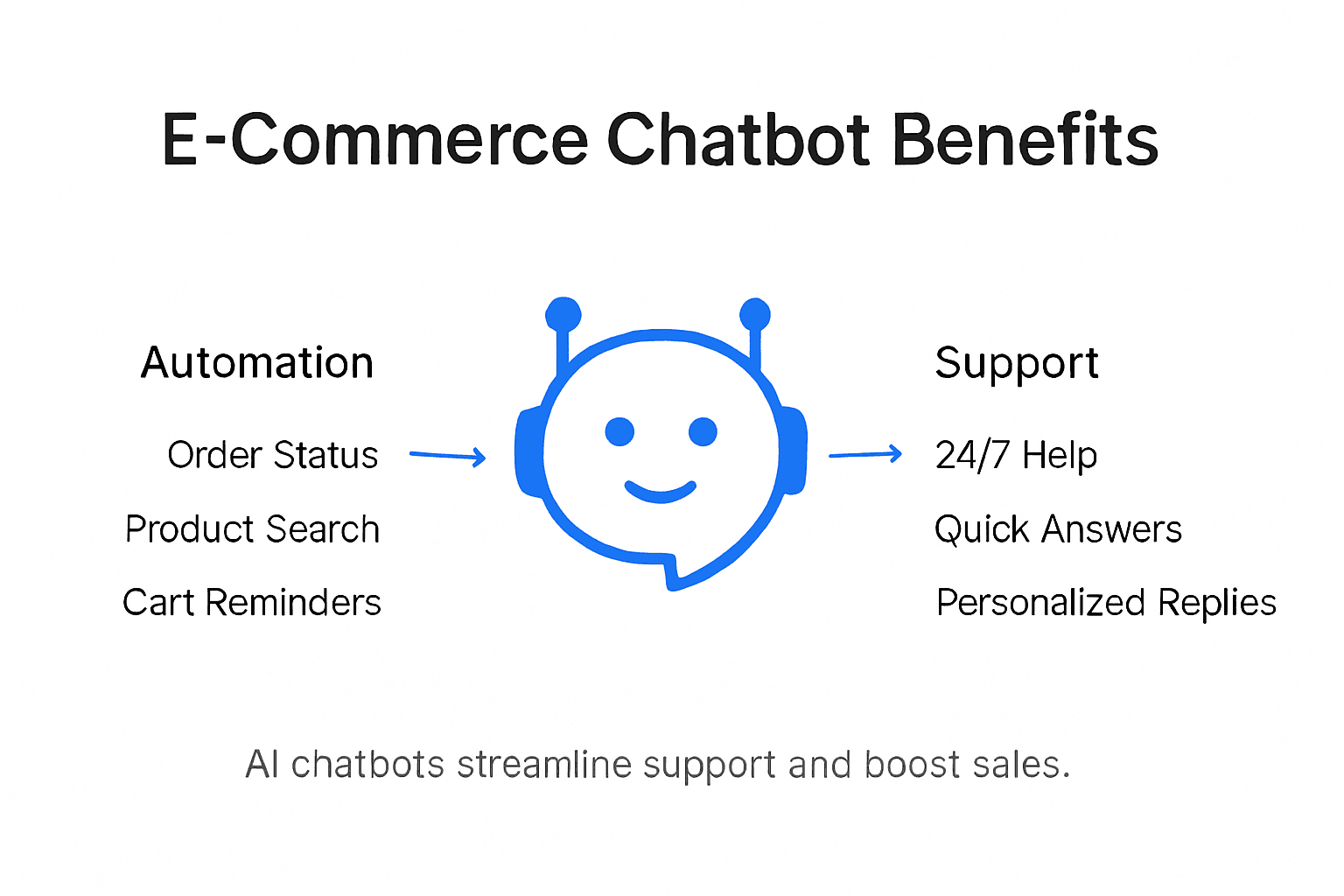
In the realm of order support, chatbots excel at automating critical tasks such as shipment tracking, delivery status updates, and real-time order inquiries. These digital assistants can instantly retrieve order information, provide precise tracking details, and resolve common customer questions without human intervention. By managing repetitive and time-consuming support functions, chatbots free up human customer service representatives to focus on more complex and nuanced customer interactions that require deeper problem-solving skills.
Lead generation represents another powerful dimension of chatbot functionality. Advanced chatbots can engage potential customers through personalized messaging, capture critical contact information, and implement sophisticated strategies like abandoned cart recovery. These systems analyze user interactions, identify potential sales opportunities, and guide customers through decision-making processes with targeted recommendations and contextually relevant information. By combining data-driven insights with conversational intelligence, chatbots transform passive website interactions into active sales and conversion mechanisms.
Pro tip: Configure your chatbot to track and analyze interaction data, using insights to continuously refine lead generation strategies and improve customer engagement pathways.
Financial Impact, Risk, and Cost Reduction
E-commerce businesses are discovering significant financial advantages through strategic chatbot implementation, with comprehensive research revealing substantial operational cost reductions and enhanced revenue potential. By automating customer service functions, companies can dramatically reduce personnel expenses while simultaneously improving response times and customer satisfaction levels.
The primary financial benefits of chatbot deployment center on operational efficiency and customer retention. Traditional customer support models require extensive human staffing, generating substantial overhead costs. Chatbots can handle multiple simultaneous interactions at a fraction of the personnel expense, significantly reducing labor costs. Moreover, these AI-powered systems provide consistent, 24/7 support without requiring additional compensation, shift management, or training investments that accompany human workforce expansion.
While chatbots offer considerable financial advantages, businesses must carefully navigate potential risks such as technological limitations and customer perception. Implementing a hybrid support model that combines AI chatbot efficiency with human expertise helps mitigate communication risks and ensures complex inquiries receive nuanced, comprehensive responses. Advanced chatbots can seamlessly escalate challenging interactions to human representatives, maintaining service quality while preserving the cost-saving benefits of automated support systems.
The following table summarizes major ways e-commerce chatbots impact business operations:
| Benefit Area | Chatbot Contribution | Business Outcome |
|---|---|---|
| Order Support | Instant tracking and status updates | Higher customer satisfaction |
| Lead Generation | Engages and qualifies customers | Increased conversion rates |
| Cost Reduction | Automates repetitive tasks | Lower operational expenses |
| Risk Mitigation | Escalates complex issues | Improved service reliability |
Pro tip: Conduct regular performance audits of your chatbot’s interaction data to identify areas for improvement and ensure a balanced approach between automated and human customer support.
Common Implementation Mistakes to Avoid
E-commerce businesses frequently encounter critical challenges when deploying chatbot technologies. Extensive research highlights systematic errors that can significantly undermine the effectiveness of digital customer support systems, emphasizing the importance of strategic implementation.
One fundamental mistake is selecting inappropriate chatbot technologies for specific business requirements. Rule-based chatbots may suffice for straightforward interactions, but complex e-commerce environments demand sophisticated AI-powered solutions capable of understanding nuanced customer inquiries. Many businesses erroneously choose inflexible systems that cannot adapt to evolving customer communication patterns, resulting in frustrating user experiences and diminished engagement rates. Successful implementation requires carefully matching chatbot capabilities with specific operational needs, communication complexity, and customer interaction dynamics.
Another critical implementation pitfall involves insufficient training and continuous improvement mechanisms. Chatbots require robust datasets and ongoing refinement to maintain accuracy and relevance. Businesses often neglect critical steps such as comprehensive initial training, regular performance reviews, and systematic feedback integration. Without dedicated resources for machine learning optimization, chatbots quickly become obsolete, providing generic or incorrect responses that damage customer trust and potentially drive potential buyers away from the platform.
Pro tip: Develop a comprehensive chatbot testing protocol that includes periodic performance audits, user feedback analysis, and adaptive learning strategies to ensure continuous improvement and relevance.
Enhance Your E-Commerce Success with AI-Powered Chatbots
The article highlights key challenges in e-commerce such as automating order support, delivering personalized customer experiences, and efficiently generating leads while reducing operational costs. If you want to overcome these hurdles with a powerful solution that adapts to your customers and business needs, ChatPirate.io offers exactly that. Our AI-powered chatbots learn from your website content and knowledge bases to provide instant, accurate responses 24/7 without the need for coding skills.
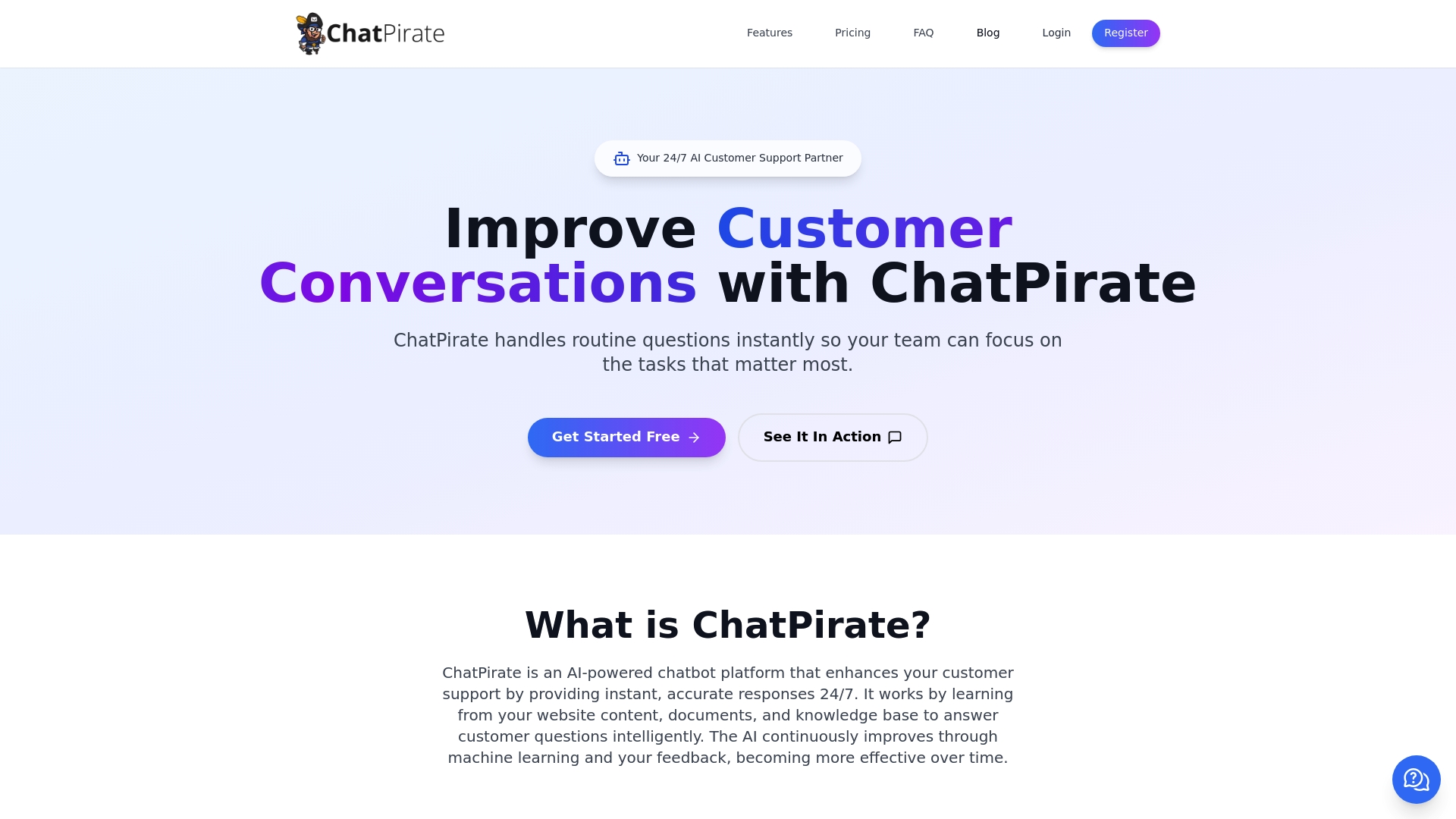
Discover how ChatPirate.io can transform your e-commerce platform with customizable chatbots that deliver seamless order tracking, personalized recommendations, and smart lead qualification. Experience increased customer satisfaction and reduced support expenses today. Visit ChatPirate.io to explore our features and start enhancing your customer support with AI.
Learn more about our easy integration options with popular website builders like WordPress and Shopify at ChatPirate.io and take the first step toward a smarter, more efficient customer engagement system.
Frequently Asked Questions
What are the main types of chatbots used in e-commerce?
E-commerce chatbots primarily fall into two categories: rule-based chatbots and AI-powered chatbots. Rule-based chatbots operate based on predefined scripts and are best for simple inquiries, while AI-powered chatbots utilize machine learning and natural language processing to handle complex queries and provide personalized responses.
How do chatbots enhance the customer experience in online shopping?
Chatbots improve the customer experience by offering dynamic personalization, proactive support, and intelligent conversation routing. They analyze customer data to provide tailored product recommendations, swiftly resolve inquiries, and ensure a smoother shopping journey.
What functions can e-commerce chatbots automate?
E-commerce chatbots can automate various tasks including order tracking, shipment inquiries, and personalized product recommendations. They also engage in lead generation by capturing customer information and recovering abandoned carts through targeted messaging.
What are common mistakes to avoid when implementing chatbots in e-commerce?
Common mistakes include selecting the wrong type of chatbot for your business needs and failing to adequately train and refine the chatbot. It’s crucial to align chatbot capabilities with customer interaction complexity and continuously improve through performance audits and feedback integration.
Leave a Reply