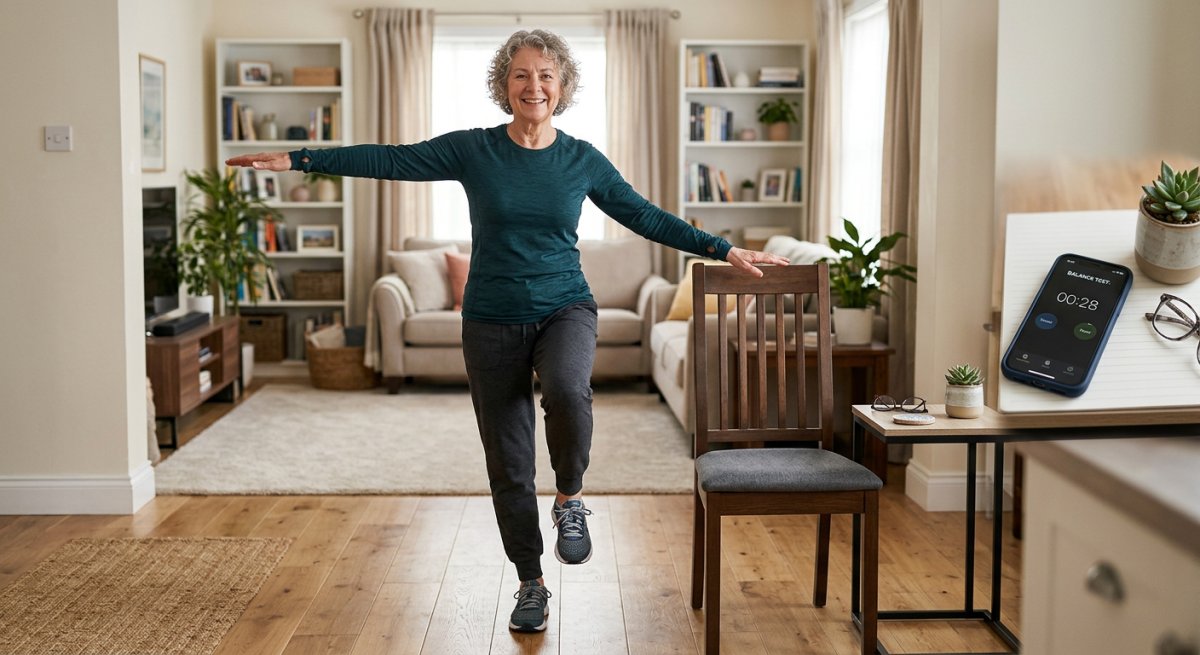
Choosing the right way to check balance is the first move toward safer mobility. Many adults can spot early signs of balance decline at home, and acting on them can prevent serious injury. This guide shows 7 easy, safe self-tests, how to score them, immediate home changes, starter exercises, and when to seek fall-prevention physical therapy.
Table of Contents
- Step 1: Prepare and Safety
- Step 2: Static Balance Tests
- Step 3: Dynamic Balance Tests
- Step 4: Functional Mobility Tests
- Step 5: Interpret Results and Next Steps
- Step 6: Immediate Home Safety and Starter Exercises
- Step 7: Working with Back in Motion Sports & Physical Therapy
Quick Summary
| Key Point | Explanation |
|---|---|
| Prepare safely | Test near a sturdy chair, wear shoes, have a helper if unsure |
| Seven tests | Static, dynamic, and functional tests give a clear fall-risk snapshot |
| Score interpretation | Low/Moderate/High risk based on thresholds and number of abnormal tests |
| Immediate actions | Remove trip hazards, add lighting, start 10-15 minute daily balance exercises |
| When to seek PT | Multiple failed tests or times outside norms – schedule an evaluation promptly |
Step 1: Prepare and Safety
This step ensures you perform tests safely and record meaningful results. Safety prevents falls during testing and gives reliable baseline measures for future comparison.
Clear a 3-4 foot area near a sturdy chair or countertop and place a stopwatch or phone timer within reach. Wear supportive shoes or stable slippers; do not test barefoot if your feet slip easily.
Have a family member nearby if you feel unsure or if you have significant dizziness or recent falls. Note baseline conditions: current medications, time of day, recent illness, and whether you used caffeine or alcohol.
If you feel dizzy, lightheaded, or unsafe at any point, stop and sit. Repeat these preparatory steps before retesting in 1-2 weeks to track change.
Pro Tip: Stand close enough to touch a chair behind you quickly, without leaning on it during the test. That lets you catch yourself if needed while keeping the test valid.
Step 2: Static Balance Tests
Static tests show how well you can hold steady without movement and highlight sensory or strength deficits. We cover Single-Leg Stand, Tandem Stance, and Romberg.
Single-Leg Stand: Stand with arms at sides and lift one foot off the floor. Time up to 30 seconds. Pass threshold: hold 10 seconds or more. If you cannot reach 10 seconds or need to touch the chair, consider this an abnormal result.
Tandem Stance (heel-to-toe): Place one foot in front of the other, heel touching toe, and hold for 30 seconds. Inability to hold for 30 seconds suggests reduced static balance and higher fall risk.
Romberg Test: Stand feet together, arms at sides. Compare stability with eyes open and then eyes closed for 30 seconds each. Marked sway or loss of balance with eyes closed suggests sensory or proprioceptive issues.
Pro Tip: Use a stopwatch on your phone and record times in a log. Note which side is weaker for single-leg stands to guide targeted exercises.
[IMAGE: Photo showing single-leg stand near a sturdy chair, stopwatch visible]
Validation: You did it right if you recorded times, kept arms at sides, and did not use support. Repeat each trial twice and use the best time.
Step 3: Dynamic Balance Tests
Dynamic tests show how balance functions while moving and turning, which is where many falls occur. We include the 4-Stage Balance Test and the Timed Up and Go (TUG).
4-Stage Balance Test: Progress through positions from feet apart to tandem stance and semi-tandem, ending with heel-to-toe. Hold each 10 seconds. Failure to hold the final stage indicates higher fall risk.
Timed Up and Go (TUG): From a standard chair, stand, walk a measured 3 meters (10 feet), turn, return, and sit. Use a firm chair and measure 3 meters with tape. Normal threshold: under 12 seconds for community-dwelling older adults; over 12-15 seconds indicates mobility impairment.
Perform each test once after practice trials. Record time and any unsteady steps, need for support, or difficulty turning.
Pro Tip: Mark the 3-meter path on the floor with tape. Turn around a cone or small object to standardize turning mechanics.
[IMAGE: Diagram showing TUG route: chair, 3-meter marker, turn point]
Troubleshoot: If the path is short, use a hallway and adjust distance to exactly 3 meters. Validation: a clean timed trial and notes about balance events (stumbles, grabbing a rail).
Step 4: Functional Mobility Tests
Functional tests assess strength and repeated movement ability that support daily activities. We cover 5-Times Sit-to-Stand and the 30-Second Chair Stand plus gait observation.
5-Times Sit-to-Stand: From a standard chair (seat height ~17 inches), cross arms over chest and stand fully, sit, and repeat 5 times. Time starts on first stand. Normal threshold: under 15 seconds suggests adequate lower-extremity strength; over 15 seconds suggests weakness.
30-Second Chair Stand: Count how many full stands you complete in 30 seconds, arms folded. Fewer than 8-12 stands (age dependent) suggests decreased functional strength.
Gait Observation: Walk 10-20 feet at a normal pace and note shuffling, uneven steps, reduced arm swing, or short step length. These observations predict fall risk and guide targeted gait training.
Pro Tip: Use a stopwatch and a standard chair; if you use your arms, note it – that counts as an assisted trial and lowers the score.
Validation: Accurate time/counts and consistent chair height ensure comparable results across retests. Note pain, dizziness, or need to use arms.
Step 5: Interpret Results and Next Steps
This step translates test scores into low, moderate, or high fall-risk categories and gives clear next actions. Combine multiple abnormal tests for stronger evidence of risk.
Low risk: Most tests normal – single-leg ≥10 seconds, TUG <12 seconds, 5x sit-to-stand <15 seconds, 30-sec chair stand within age norms. Action: begin home exercise plan, re-test in 4-6 weeks.
Moderate risk: One or two abnormal results, or borderline times. Action: start targeted home exercises, fix home hazards, and consider a physical therapy consult within 2-4 weeks.
High risk: Multiple abnormal tests, TUG >15 seconds, or history of recent falls. Action: schedule a fall-prevention PT evaluation promptly, review medications with your provider, and avoid high-risk activities until evaluated.
Pro Tip: Use a risk log: list each test, result, and date. If two or more test results are abnormal, treat it as moderate-high risk and contact a therapist.
Troubleshooting: Re-run tests after an hour of rest if you suspect fatigue affected results. Validation occurs when retest values improve with intervention or remain stable when low risk.
Step 6: Immediate Home Safety and Starter Exercises
Make immediate home changes to reduce trip hazards and begin simple exercises to build balance and strength. Small actions reduce near-term risk while you pursue longer-term therapy.
Home modifications: Remove loose rugs, secure cords, add night lights in hallways, use non-slip mats in showers, and install grab bars near toilets and showers. Keep frequently used items within easy reach to avoid climbing.
Starter exercises (10-15 minutes daily): heel raises 10-15 reps, sit-to-stands 2 sets of 8-12, side leg raises 10 each side, tandem walking 10 steps each way along a hallway while holding a support initially.
Progress safely: start with hands-on support, then reduce support as you feel stable. Stop and sit if you feel dizzy or experience pain, and note any issues in your log.
Pro Tip: Aim for 3 sessions per week for strength drills and daily short balance practice. Record reps and progression to monitor improvement.
[IMAGE: Simple sequence of heel raises and tandem walking in a hallway]
Validation: After 4-6 weeks you should see improved single-leg times, more sit-to-stands in 30 seconds, or faster TUG times. If not, escalate to professional care.
Step 7: Working with Back in Motion Sports & Physical Therapy
We turn your self-assessment findings into a focused plan that reduces fall risk and restores confidence. A clinic evaluation adds objective measures, manual therapy, and individualized progression.
Our initial assessment includes formal balance tests, gait analysis, strength and range-of-motion measures, and a medication and environment review. We identify vision or neurologic contributors and set measurable goals like improving TUG time by 2-3 seconds in 6 weeks.
Treatment features: personalized exercise programs, vestibular rehab when indicated, hands-on techniques, home-safety recommendations, and outcome tracking with re-assessments at 4 and 12 weeks. We coordinate with your primary care or specialists as needed.
Contact us to get started, book an evaluation, and set realistic milestones. We focus on function, safety, and confidence so you can move better and safer.
Pro Tip: Bring your self-test log to your appointment. It helps us target deficits quickly and measure progress against your baseline.
Key Elements Table
| Assessment Area | What to Examine | Impact on Outcome |
|---|---|---|
| Balance timing | Single-leg time, tandem hold, Romberg change | Shorter holds indicate sensory or strength deficits; guides balance drills |
| Mobility speed | Timed Up and Go (seconds) | Longer times show gait/turning impairment; predicts fall risk and therapy urgency |
| Lower-extremity strength | 5x Sit-to-Stand time, 30-sec stand count | Poor strength correlates with reduced safety moving from chair and climbing steps |
| Home environment | Lighting, trip hazards, grab bars | Fixes reduce immediate fall risk and support therapy gains |
Comparison Table
| Approach | Resource Needs | Best Use Case |
|---|---|---|
| Home Self-Assessment | Chair, tape measure, stopwatch, helper | Quick screening and early detection, low cost |
| Guided Home Program | PT-developed exercises, periodic check-ins | Moderate risk or motivated self-managers needing structure |
| Clinic PT Program | Formal testing, hands-on treatment, equipment | High risk, recent falls, vestibular or neurologic issues |
Unlock Safer Mobility with Back in Motion Sports & Physical Therapy
We translate home self-assessment findings into a personalized fall-prevention plan that improves balance, strength, and confidence. Our clinicians perform detailed balance and gait assessments, track objective outcomes, and teach progressive exercises that fit your daily routine.
We provide hands-on care, vestibular rehabilitation when needed, and practical home-safety recommendations. Contact us to schedule an evaluation, get started with a measurable plan, or book a follow-up to track improvements.
Advantages of working with us:
- Personalized plans with measurable goals and regular re-assessments
- Expertise in sports, vestibular, and geriatric balance rehabilitation
- Coordinated care with your medical team for safety and efficiency
Frequently Asked Questions
Q: Are these home tests safe to perform alone? A: Yes when you prepare properly: test near a sturdy chair, wear supportive shoes, and stop if you feel dizzy. Have someone nearby if you have recent falls or significant balance loss, and avoid testing immediately after fainting or major illness.
Q: How often should I re-test to track progress? A: Re-test every 4-6 weeks after starting exercises or interventions. For high-risk individuals, re-assess every 2-4 weeks until stability improves, then extend intervals to 8-12 weeks.
Q: When should I contact a physical therapist? A: Contact a PT promptly if you have multiple abnormal test results, a recent fall, TUG >15 seconds, or progressive balance decline. Early evaluation within 1-2 weeks prevents further decline and speeds recovery.
Q: Can medications affect my balance? A: Yes, many medications cause dizziness, sedation, or orthostatic changes; review medications with your primary care provider and pharmacist within 1-2 weeks if tests are abnormal.
Q: How will I know if therapy is working? A: Measure success with objective metrics like improved TUG time by 2-3 seconds, increased single-leg hold by 5-10 seconds, or more repetitions in the 30-sec chair stand over 4-12 weeks. Also track fewer stumbles and increased confidence.
Q: What should I do right after a fall? A: Seek medical care if injured. If uninjured, document the event, avoid getting back to risky activities, and schedule a PT evaluation within a few days to assess cause and prevent recurrence.
Leave a Reply