More than 1.6 million sports-related concussions occur in the U.S. each year, and 30% of people keep symptoms beyond three months. Patients face dizziness, imbalance, and visual motion sensitivity that stop them from working and playing. This article explains what drives vestibular symptoms, which exercises accelerate recovery, and how to track progress to return to activity safely.
Table of Contents
- Defining Concussion and the Vestibular System
- Symptoms That Suggest Vestibular Involvement After Concussion
- What is Vestibular Rehabilitation Therapy (VRT)? Evidence and Techniques
- Practical Home Exercises and Clinic Programs
- Recovery Timeline, Monitoring Progress, and Return-to-Activity
- When to Seek Specialist Care and the Role of a Multidisciplinary Team
Key Takeaways
| Point | Details |
|---|---|
| Concussion basics | A concussion is a mild traumatic brain injury caused by head impact or acceleration-deceleration forces; symptoms often start within 72 hours. |
| Vestibular symptoms | Dizziness, imbalance, visual motion sensitivity, and nausea point to vestibular involvement rather than only cognitive fatigue. |
| VRT effectiveness | Vestibular rehabilitation therapy reduces dizziness and improves balance; measurable gains appear in 2-8 weeks for most patients. |
| Home program | A progressive home program with 6-8 exercises, logged daily, improves adherence and speeds recovery when combined with clinic sessions. |
| Multidisciplinary care | Persistent symptoms beyond 4-6 weeks need coordinated care – PT, neurology, ENT, and behavioral health improve outcomes. |
Defining Concussion and the Vestibular System
A concussion is a functional brain injury from a blow or sudden motion that disrupts brain networks. It does not require skull fracture or loss of consciousness. Mechanisms include direct head impact, rapid rotation, or whiplash-type forces that stretch neural tissue and disrupt neural signaling.
The vestibular system includes the inner ear balance organs, the brainstem and cerebellum pathways, and cortical centers that integrate vision and proprioception. Inner ear sensors detect head motion, the brainstem translates signals to eye and neck muscles, and the cerebellum refines balance. Visual and cervical inputs also integrate with vestibular signals to maintain orientation.
Vestibular symptoms follow concussion because the system is sensitive to acceleration and sensory mismatch. When signals disagree – for example, the eyes see motion but the inner ear does not – the brain triggers dizziness, nausea, and imbalance. In athletes, this sensory mismatch causes delayed reaction times and poor on-field performance.
Start a simple symptom log immediately after injury – record dizziness intensity on a 0-10 scale three times daily. This baseline gives objective data for clinicians and speeds targeted care.
Symptoms That Suggest Vestibular Involvement After Concussion
Vestibular symptoms include spinning or non-spinning dizziness, unsteady walking, lightheadedness on standing, blurred vision or difficulty tracking moving objects, and motion-provoked nausea. These symptoms often worsen with head turns, busy visual environments, or rapid position changes. Specific timing matters – symptoms triggered by movement strongly indicate vestibular involvement.
Differentiate vestibular from cognitive or cervical causes by symptom pattern. Cognitive symptoms include slow thinking, attention deficits, and mental fatigue. Cervical-origin dizziness ties to neck pain, restricted rotation, and reproduced symptoms with neck movement. Conduct simple checks: if head movement provokes dizziness, vestibular origin is likely.
Symptom variability is common. Patients report better mornings and worse afternoons, or fluctuating dizziness across days. Track daily scores and activities that trigger spikes. Red flags needing urgent care include worsening headache, repeated vomiting, confusion, focal weakness, or vision loss; these require emergency evaluation.
Use a short red-flag checklist at home: severe worsening headache, repeated vomiting, unequal pupils, weakness, or new confusion – go to the ER if any appear.
What is Vestibular Rehabilitation Therapy (VRT)? Evidence and Techniques
Vestibular rehabilitation therapy is a protocol-driven form of physical therapy that retrains the vestibular system and sensory integration. VRT addresses the vestibulo-ocular reflex (VOR), habituation to motion, balance retraining, and functional task practice. The goal is symptom reduction, restored gaze stability, and safe mobility.
Evidence supports VRT after concussion. Controlled studies show significant decreases in dizziness scores within 2-8 weeks and improved balance metrics in the majority of patients. For persistent vestibular deficits, a multidisciplinary program with neurology and ENT improves diagnostic accuracy and outcomes. We use objective measures like Dynamic Visual Acuity and balance tests to track progress.
Techniques include VOR x1 and x2 gaze stability exercises, habituation routines for motion sensitivity, stance and gait progressions for balance, and dual-task training for cognitive-motor integration. Technology enhances therapy: virtual reality provides graded visual motion exposure, apps provide adherence reminders, and instrumented balance platforms quantify change. These tools increase engagement and measurable gains.
Ask your clinician for baseline objective tests – Dynamic Visual Acuity and a timed balance test. Re-testing every 2-4 weeks shows measurable progress and guides progression.
Practical Home Exercises and Clinic Programs
A structured home program pairs with clinic sessions. Start with 10-15 minutes twice daily. Progress by increasing sets, speed, or adding head turns, but stop or modify if symptoms double and fail to return to baseline within 20-30 minutes. Document exercises, sets, and symptom response in your log.
Core home exercises:
- VOR x1: Hold card at arm’s length, focus, and move head side-to-side for 1 minute; 3 sets. Increase speed as tolerated.
- VOR x2: Move a card and head in opposite directions for gaze stability; 3 sets of 30-60 seconds.
- Habituation: Repeatedly perform motion that provokes moderate symptoms for 30-60 seconds, 2-3 times, twice daily.
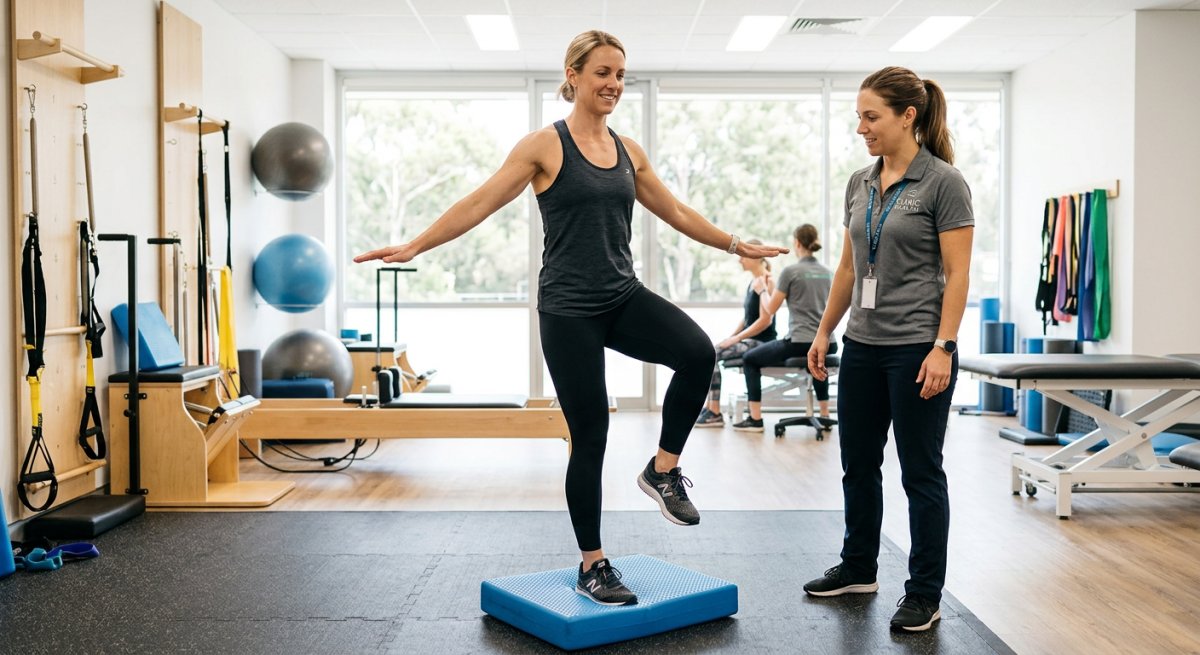
- Balance progression: Feet together, tandem, single-leg; 3 sets of 30 seconds each, add head turns.
- Gait with head turns: Walk 20-40 yards while turning head every 5-10 steps; 3 repetitions.
- Visual motion tolerance: Track moving objects or use VR exposure for 2-5 minutes, build to 10 minutes.
- Vestibular-visual dual-task: Walk while naming items or doing simple math for 1-3 minutes, 3 reps.
- Cervical mobility and strengthening if neck involved: gentle ROM and suboccipital isometrics, 10 reps.
Clinic sessions focus on individualized progression, instrumented balance training, manual therapy for cervical contributors, and integration into sport or job-specific tasks. Telehealth check-ins improve adherence; technology logs home performance and shows a 25-40% improvement in session completion rates.
Use a daily checklist and set a reminder on your phone. Track symptom scores before and 20 minutes after exercises to guide progression.
Recovery Timeline, Monitoring Progress, and Return-to-Activity
Typical concussion recovery resolves in 7-14 days for many adults, but vestibular symptoms often take 2-8 weeks to show measurable improvement with VRT. About 30% of patients have symptoms beyond 3 months; these cases need targeted reassessment for vestibular, cervical, visual, or psychological contributors. Expect variability by age, severity, and pre-existing conditions.
Monitor progress with a symptom diary, timed balance tests, and objective measures like Dynamic Visual Acuity or the Functional Gait Assessment. A simple balance test: timed tandem stance and single-leg hold. Record baseline and retest every 2 weeks. If no improvement by 4-6 weeks, escalate care.
Return-to-activity follows staged progression: symptom-limited rest 24-48 hours, light aerobic activity with no symptom exacerbation, sport-specific drills, non-contact training, full practice, and return to play. Each stage lasts 24-48 hours and only advances if symptoms do not increase beyond baseline. For work and school, use graded exposure – increase cognitive load by 10-20% each day as tolerated.
Use objective stop rules: do not progress if symptoms double and do not return to baseline within 20-30 minutes, or if balance time decreases by 20% from baseline.
When to Seek Specialist Care and the Role of a Multidisciplinary Team
Seek specialist care if symptoms persist beyond 2-4 weeks despite a home program, if symptoms worsen, or if red flags appear. Specialists include vestibular physical therapists, neurologists, ENT specialists, neuro-optometrists, and behavioral health clinicians. Each specialist contributes specific diagnostic tests and targeted treatments.
Neurology evaluates for persistent brain network dysfunction and orders imaging if focal deficits exist. ENT assesses inner ear function with videonystagmography and vestibular evoked myogenic potentials. Neuro-optometry treats visual-vestibular integration issues. Behavioral health addresses anxiety and avoidance that sustain symptoms. Coordinated care reduces symptom duration and improves return-to-work rates.
Common diagnostic tests include video head impulse test (vHIT), caloric testing, balance platform measures, and near-point convergence testing. Results guide whether VRT, medical therapy, surgical referral, or vision therapy is primary. Communication between clinicians ensures efficient, targeted treatment and reduces redundant testing.
If your treatment plan spans multiple specialists, request a single coordinated care plan and weekly updates. This reduces delays and keeps measurable goals in focus.
Comparison of Approaches
| Approach | Typical Use Case | Time to Measurable Improvement |
|---|---|---|
| Vestibular Rehabilitation Therapy (VRT) | Primary treatment for movement-provoked dizziness and imbalance | 2-8 weeks for most patients |
| Cervical Physical Therapy | When neck pain or ROM loss reproduces dizziness | 2-6 weeks with manual therapy and exercise |
| Vestibular-suppressant medications | Short-term use for severe nausea or acute vertigo episodes | Symptom relief within hours to days, not long-term solution |
| Multidisciplinary program (PT + neurology + optometry) | Persistent symptoms beyond 4-6 weeks or complex cases | 4-12 weeks for integrated improvements |
Real World Use Case
A 22-year-old college soccer player had persistent dizziness 3 weeks after a concussion. We performed VOR testing, started a home VOR x1/x2 program, added balance progression and weekly clinic sessions, and used virtual reality for visual motion tolerance. The athlete returned to full practice in 6 weeks with normalized Dynamic Visual Acuity and no symptom flare-ups during sport.
Transform Balance and Recovery with Back in Motion Sports & Physical Therapy
We treat concussions with a clear plan that focuses on vestibular function, objective measurement, and progressive return-to-activity. Our therapists perform targeted VRT, integrate cervical and visual assessments, and use technology to track home adherence and outcomes. We deliver measurable improvements: most patients show symptom reduction within 2-8 weeks.
Contact us today to schedule a focused evaluation, start a personalized home program, or request telehealth check-ins for remote monitoring. Book your consultation with our team to get an individualized recovery plan and objective testing that shows progress.
- Personalized treatment plans with advanced vestibular testing and VR-supported therapy
- Coordinated care across PT, neurology, and vision specialists for persistent cases
- Measurable goals, progress tracking, and a clear return-to-activity roadmap
Frequently Asked Questions
Q: How long does vestibular rehabilitation take to work? A: Most patients report measurable improvement in dizziness and balance within 2-8 weeks of consistent VRT and home exercise. About 30% have symptoms beyond 3 months and need multidisciplinary reassessment.
Q: What exercises should I start at home after a concussion? A: Begin with VOR x1 and VOR x2 gaze stability exercises, basic balance progressions, gait with head turns, and short habituation routines. Do 10-15 minutes twice daily and log symptom response; stop or modify if symptoms double and do not return to baseline within 20-30 minutes.
Q: When should I see a specialist for dizziness after a concussion? A: See a vestibular therapist or specialist if symptoms persist past 2-4 weeks, if you have repeated symptom spikes, or if red flags like worsening headache, repeated vomiting, or focal weakness appear. Early specialist care reduces time lost from work or sport.
Q: Will medication fix my dizziness? A: Vestibular-suppressant medications relieve severe acute symptoms and nausea, often within hours to days, but they do not replace VRT. We use meds selectively while starting active rehabilitation to restore long-term function.
Q: Can technology like VR help my recovery? A: Yes, VR provides controlled visual motion exposure that speeds habituation and increases tolerance to busy environments. Clinics using VR report higher adherence and faster measurable gains when combined with standard VRT.
Leave a Reply