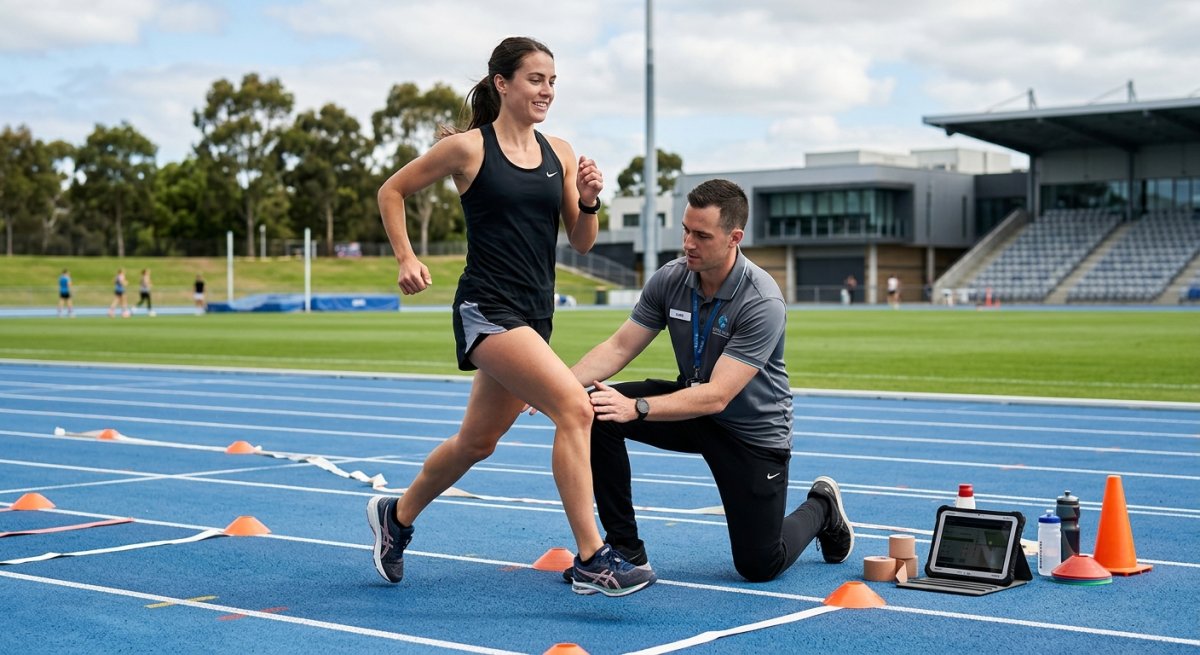
Choosing the right physical therapy clinic for athletes is the first strategic move toward faster recovery and long-term performance. Athletes need clinics that assess precisely, fix the root cause, and build resilience through evidence-based, progressive plans. This guide shows you 10 practical criteria and a reproducible comparison method so you pick the clinic that will restore performance, prevent recurrence, and measure success.
Table of Contents
- Step 1: Define Needs and Performance Goals
- Step 2: Verify Clinical Expertise and Certifications
- Step 3: Assess Treatment Model and Return-to-Sport Protocols
- Step 4: Check Access, Telehealth, and Practical Logistics
- Step 5: Evaluate Outcomes, Culture, and Patient Satisfaction
- Step 6: Run a Side-by-Side Comparison and Interviews
- Step 7: Decide, Onboard, and Track Progress
Quick Summary
| Key Point | Explanation |
|---|---|
| Define precise goals | List sport, position, timelines, pain triggers, and performance targets before you call clinics |
| Prioritize certified expertise | Seek SCS, COMT, CSCS, or equivalent and sport-specific experience |
| Demand objective metrics | Require baseline strength, ROM, movement screens, and clear return-to-play tests |
| Compare logistics | Check telehealth, scheduling flexibility, equipment, and proximity to training facilities |
| Validate outcomes | Use reviews, published discharge rates, and ask for sample progress trackers |
Step 1: Define Needs and Performance Goals
Start by clarifying what “return to play” looks like for you and why this injury or performance issue matters. This step sets evaluation priorities and informs which clinic specialties matter most. Write a one-page summary with injury details, current training load, competition calendar, and specific performance goals like sprint speed, squat 1RM, or pitch velocity.
Describe pain patterns, previous treatments, imaging, and any failed approaches. Note if you need short-term rapid return or long-term durability and resilience. Provide this summary when you contact clinics to get tailored answers rather than generic promises.
Prepare quantifiable targets: example – reduce pain from 6/10 to 2/10 in four weeks, regain 90 percent quadriceps strength compared to contralateral limb, complete sport-specific drill at full speed without compensation. These metrics make later comparisons objective.
Request clinics to evaluate your summary before booking. Clinics that ask for details upfront demonstrate assessment-driven care and root-cause focus.
[hints: IMAGE: Example one-page athlete summary showing injury timeline, goals, and recent imaging]
Step 2: Verify Clinical Expertise and Certifications
This step ensures clinicians have sport-specific skills and advanced training. Ask for clinician credentials and relevant certifications such as SCS (Sports Certified Specialist), COMT (Certified Orthopedic Manual Therapist), CSCS (Certified Strength and Conditioning Specialist), or residency/fellowship training. Confirm who will perform the assessment and how much hands-on time they provide.
Request examples of working with your sport or position and years of experience with similar injuries. Ask which multidisciplinary relationships they maintain – athletic trainers, strength coaches, physicians – and how coordination happens. Strong clinics match clinician skill to athlete needs, not schedule convenience.
Validate credibility by asking for case examples, outcome metrics, or published results. A performance-driven clinic will explain assessment protocols, not just list modalities. If a clinician avoids specifics or says "it depends" without a framework, flag that as a red flag.
Ask if the clinic does regular in-house calibration – peer reviews, video analysis, or strength testing audits. Ongoing clinician development correlates with better, repeatable outcomes.
Step 3: Assess Treatment Model and Return-to-Sport Protocols
Determine whether the clinic uses an assessment-driven, progressive model that targets root causes rather than symptom management. Ask for the typical assessment battery: strength testing with dynamometer or handheld values, range of motion metrics, movement screens, hop tests, or velocity/power measures. Expect objective baselines and weekly progress checkpoints.
Review their return-to-sport criteria and staged protocols. A good clinic outlines phases – reduce pain and restore control, restore capacity and load tolerance, then sport-specific power and reaction drills – with measurable criteria for progression. Demand sport-specific drill examples and how they scale intensity and volume.
Look for integration of strength and conditioning principles, load management, and movement retraining. Avoid clinics that rely primarily on passive treatments without clear progression. You want a plan that ends with performance, not a plan that only reduces symptoms.
Request a sample 6-12 week plan for an injury similar to yours. That reveals whether the clinic plans by symptom relief or by progressive capacity-building.
[hints: IMAGE: Sample staged return-to-sport timeline showing phases, tests, and progression benchmarks]
Step 4: Check Access, Telehealth, and Practical Logistics
Evaluate how the clinic fits into your training and travel schedule. Confirm appointment availability, evening or weekend slots, and wait times for initial evaluation. Ask whether clinicians coordinate with your coach or trainer and whether sessions can occur at the gym or field.
Confirm telehealth capabilities for follow-ups, remote cueing, or off-season check-ins. Telehealth should include video analysis, progress monitoring, and remote strength programs. Verify platform requirements and typical session length – expect 30 to 60 minute telehealth follow-ups and 45 to 60 minute in-clinic assessments.
Check logistical elements: on-site equipment (sleds, plyo boxes, force plates, isokinetic or dynamometer if needed), parking, and proximity to training facilities. Practical fit drives adherence, which drives outcomes.
Test their telehealth by requesting a brief video consult. Fast, structured virtual visits show readiness for travel seasons and remote coaching.
Step 5: Evaluate Outcomes, Culture, and Patient Satisfaction
Verify real-world effectiveness through outcomes, testimonials, and patient satisfaction metrics. Request discharge rates, average time to return-to-play, and re-injury rates for athletes. Look for published outcome data or internal trackers demonstrating measurable improvement.
Assess clinic culture during your visit: athlete-focused spaces, staff energy, availability of sport-specific equipment, and a team-based approach. An environment that trains the athlete, not just treats the injury, improves motivation and adherence. Read reviews and ask for athlete references matching your sport and level.
Measure the clinician’s education style during the first assessment. We prioritize teaching ownership and progressive load plans. If clinicians ignore education or give "just rest" advice, mark that as a misfit.
Ask to see a sample progress tracker or discharge summary. Clinics serious about outcomes provide transparent metrics and clear progression charts.
Step 6: Run a Side-by-Side Comparison and Interviews
Create a simple spreadsheet with columns: Clinic name, Staff credentials, Evidence-based practices, Return-to-sport protocol, Telehealth, Outcomes, Culture, Price, Location, Scheduling. Score each clinic 1-5 on each criterion. Use your weighted priorities to calculate a composite score.
Schedule initial assessments when possible. During assessments, watch for thorough history taking, objective testing, and a clear, staged plan with measurable milestones. Ask direct questions: How do you measure readiness to return-to-play? Which clinician performs my assessment? Can I see past athlete outcomes?
Compare clinician behavior: did they identify root causes, propose targeted interventions, and give measurable goals? Validate with a second voice if possible – get a coach, athletic trainer, or trusted teammate to join a visit or call. Use the spreadsheet to keep evaluations objective.
Offer a short trial session or single-assessment visit. Clinics that allow a focused assessment without long-term commitment show confidence in their process.
Step 7: Decide, Onboard, and Track Progress
Choose the clinic with the highest weighted score and clear plan alignment with your goals. Use a weighting example: expertise 30 percent, evidence 25 percent, access 15 percent, cost 15 percent, culture 15 percent. Adjust weights to fit your priorities. Document the selected plan, milestones, and expected timelines.
Prepare for your first visit: bring injury summary, imaging, training schedule, shoes, and baseline performance notes. Confirm the clinician will record baseline metrics and issue a written plan with progression criteria. Start with agreed benchmarks: weekly load increases, strength targets, and functional test goals.
Track progress weekly using objective metrics and a shared progress tracker. Validate that the clinician updates the plan based on measured outcomes, not subjective timelines. If progress stalls after a defined period, request a plan review or second opinion.
Insist on written progression criteria and a scheduled re-evaluation at 4 and 8 weeks. If those checkpoints are missed, escalate or re-evaluate care.
Key Elements Table
| Assessment Area | What to Examine | Impact on Outcome |
|---|---|---|
| Clinician Credentials | SCS, COMT, CSCS, residency, sport experience | Higher probability of accurate diagnosis and sport-specific rehab |
| Objective Metrics | Strength tests, ROM, hop tests, force plate or dynamometry when needed | Clear progress, reduced re-injury risk, measurable return-to-play criteria |
| Treatment Model | Staged RTP protocols, integrated strength and conditioning | Faster, safer return with improved resilience |
| Access & Logistics | Telehealth, scheduling, on-site equipment, location | Better adherence, consistent progression, fewer missed sessions |
Comparison Table: Basic Clinic vs Performance-Focused Clinic
| Strategy | Scalability | Use Case |
|---|---|---|
| Symptom-driven care | Low – repeats passive treatments | Acute pain control, not ideal for athletes |
| Assessment-driven, progressive | High – measurable, adaptable to sport | Athletes needing return-to-play and long-term durability |
| Limited equipment, narrow hours | Moderate – fits local convenience | Casual or recreational cases |
| On-site performance lab, multidisciplinary | High – integrates strength, analytics, and sport drills | Competitive athletes and high-load return scenarios |
Unlock Optimal Recovery and Performance with Back in Motion
We focus on precise assessment, fixing the root cause, and building long-term resilience for athletes. Our clinicians combine sports certification, performance-based testing, and staged return-to-sport protocols so you leave pain behind and restore measurable capacity. We pair hands-on care with strength and conditioning progressions that mirror your sport demands.
We make decisions based on data, not habit. You get objective baselines, weekly checkpoints, and sport-specific progression criteria. Contact us to get started with a focused assessment, align timelines with your competition calendar, and receive a clear plan that prioritizes performance and durability.
- Athlete-specific assessments and measurable return-to-play criteria
- Telehealth for remote coaching and season travel support
- Integrated strength and conditioning with clinician-guided progression
Frequently Asked Questions
Q: How quickly will I see measurable progress? A: Expect objective changes in strength or movement quality within 2 to 6 weeks with consistent training and load progression; timelines vary by injury severity and baseline conditioning. Track weekly metrics such as strength percentage, ROM degrees, or functional hop distance to confirm change.
Q: What should I ask during the first phone call? A: Ask which clinician will assess you, what objective tests they use, expected assessment length, and whether they offer telehealth follow-ups. Request typical timelines for your injury type and examples of sport-specific drills used in later phases.
Q: How do I measure success and readiness to return-to-play? A: Use objective criteria: limb symmetry index >= 90 percent for strength or hop tests, sport-specific power and velocity targets, and ability to perform full-speed drills without compensation for 2 consecutive sessions. Success includes a discharge summary with maintenance and injury-prevention plan.
Q: Will insurance cover athlete-focused care and telehealth? A: Coverage varies by plan; ask clinics to verify benefits and explain out-of-pocket options. Many clinics provide itemized plans and cash-pay performance packages when insurance limits access to specific services.
Q: What are common red flags when choosing a clinic? A: Red flags include vague plans, no objective testing, heavy reliance on passive modalities without progression, and clinicians who do not ask about training load or sport demands. If you hear "just rest" or "come back if it hurts" without a plan, look elsewhere.
Q: Can telehealth replace in-person sessions for athletes? A: Telehealth works for follow-ups, technique coaching, and remote monitoring but does not replace initial hands-on assessments when manual testing or hands-on interventions are required. Use telehealth for maintenance, travel seasons, and monitoring load between in-person sessions.
Leave a Reply