More than 3 million older adults visit emergency departments each year because of falls. For seniors and caregivers, the real challenge is recognizing risk early and taking targeted action that stops the cycle of weakness, fear, and isolation. This guide explains how assessment-driven exercise, smart home changes, and timely physical therapy restore balance and preserve independence.
Table of Contents
- Understanding Falls and Fall Risk in Seniors
- Evidence-Based Exercises to Improve Balance and Strength
- Home Safety: Practical Modifications to Prevent Falls
- When to Seek Physical Therapy and What to Expect
- Community Resources, Classes and Support Networks
- Action Plan: Putting It All Together
Key Takeaways
| Point | Details |
|---|---|
| Scope of risk | Falls cause over 3 million ED visits and cost the U.S. more than $50 billion annually; prevention matters for health and finances. |
| Root-cause approach | Assessment-driven care finds movement deficits and medication contributors, rather than just treating symptoms. |
| Exercise impact | Regular progressive balance and strength training reduces fall rates by roughly 20-30% and improves functional independence. |
| Home modifications | Low-cost fixes (lighting, rugs) and priority upgrades (grab bars, handrails) substantially lower home fall risk. |
| When to get PT | Seek PT for recurrent falls, new balance loss, dizziness, or declining mobility; structured PT yields measurable gains in 6-12 weeks. |
Understanding Falls and Fall Risk in Seniors
Falls are the leading cause of injury-related emergency visits for older adults. Each year, about 3 million seniors go to emergency departments due to falls, and the annual cost exceeds $50 billion. These figures show why awareness matters for both seniors and family caregivers.
Risk comes from intrinsic factors and extrinsic hazards. Intrinsic risks include lower-extremity weakness, slowed reaction time, poor balance, vision loss, and medications that affect alertness. Extrinsic risks include cluttered walkways, poor lighting, loose rugs, and unsafe footwear.
Simple screening raises awareness quickly. Ask three questions: Have you fallen in the past year? Do you feel unsteady when walking? Do you worry about falling enough to limit activities? Combine these with a quick Timed Up and Go test: stand up, walk 10 feet, turn, return and sit down. A time longer than 12 seconds indicates increased fall risk.
Start with the Timed Up and Go and a 30-second sit-to-stand count. Record baseline numbers: TUG >12 seconds or <8 stands in 30 seconds flags priorities for assessment and targeted training.
Evidence-Based Exercises to Improve Balance and Strength
Exercise is the foundation of fall prevention. High-quality studies show structured programs reduce fall rates by about 20-30% when they include balance training and progressive lower-extremity strengthening. The reason is simple: stronger hips, knees, and ankles improve reactive control and decrease the chance of a fall turning into an injury.
Begin with low-risk progressions. Week 1-4: seated marches, sit-to-stand practice (10 reps, 3 sets), heel raises while holding a stable surface, and 2-minute standing balance practice (tandem or side-by-side). Weeks 5-8: add single-leg stands with hand support, 10-12 controlled step-ups, and heel-to-toe walking for 1-2 minutes. Weeks 9-12: reduce hand support, increase single-leg hold time toward 20 seconds, and practice purposeful reaching while standing.
Frequency matters. Aim for balance drills 5-7 minutes daily and strength sessions 3 times per week. Track progress with objective measures: TUG times, single-leg stand time, and sit-to-stand reps. Expect measurable improvement in 6-12 weeks when exercises follow an intelligent progression.
Use the 3x/week strength and daily 5-minute balance rule. If pain or dizziness appears, stop the exercise and schedule an assessment within 72 hours.
Home Safety: Practical Modifications to Prevent Falls
Home hazards make up a large share of falls. Prioritize quick wins: remove loose rugs, declutter walkways, install brighter bulbs, and add night lights along common paths. These low-cost fixes reduce trip risk immediately and cost under $50 on average.
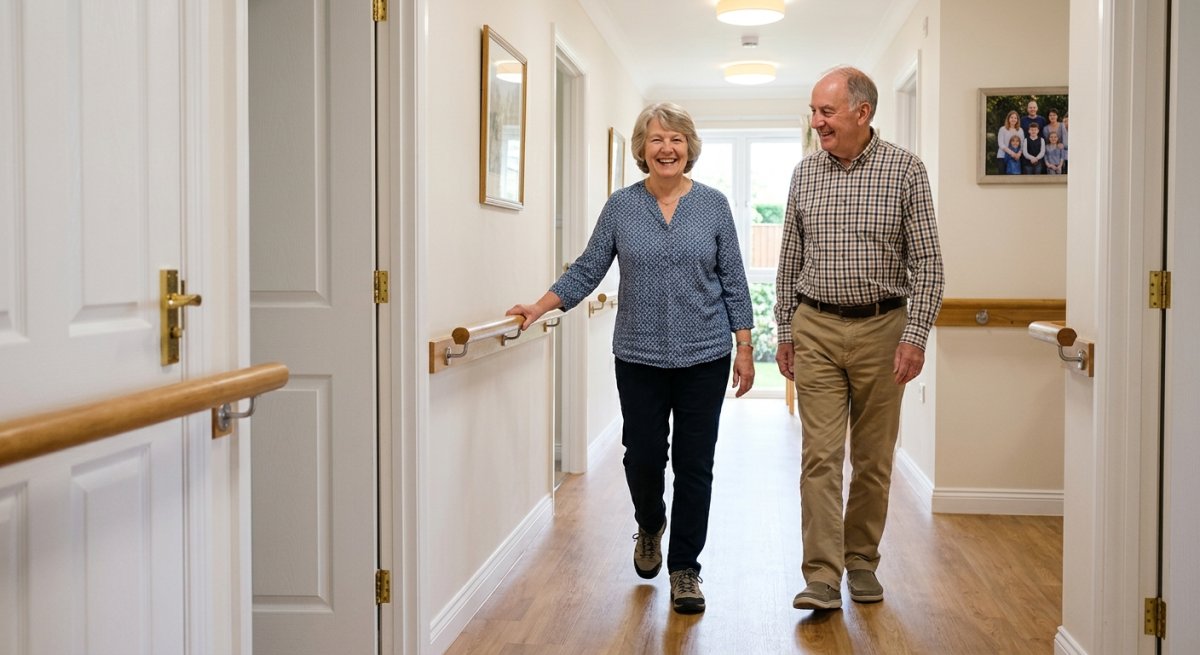
Room-by-room priorities vary. In the bathroom, install grab bars near the toilet and in the shower, use a non-slip mat, and consider a raised toilet seat. On stairs, add continuous handrails and high-contrast tape on step edges. In the kitchen and bedroom, keep frequently used items within reach to avoid climbing or awkward reaching.
Professional modifications have measurable benefits. A well-placed stair rail or a professionally installed grab bar reduces fall risk by making transfers and ambulation safer. Estimated cost ranges: $150-$500 for rail or grab bar installations, with long-term payoff in avoided injury costs.
Start with a 30-minute home hazard sweep. Remove loose rugs, add night lighting, and test shoes for tread. Schedule a professional grab bar installation for the bathroom within 2 weeks if transfers are unstable.
When to Seek Physical Therapy and What to Expect
Seek PT when falls recur, activity drops because of fear, new dizziness appears, or mobility declines after illness or surgery. Clear indicators: two or more falls in 12 months, TUG >12 seconds, or inability to rise from a chair without using arms. Early referral prevents decline and restores function.
A precise PT assessment looks beyond symptoms. Expect objective gait and balance tests, muscle strength and range-of-motion measures, medication review coordination with your physician, and a home safety evaluation. We set clear goals: faster TUG, longer single-leg stand, and fewer near-misses over a 6-12 week plan.
Treatment is individualized and performance-driven. Interventions include progressive strengthening, balance retraining, gait mechanics coaching, vestibular rehabilitation for dizziness, and assistive device training. Typical outcomes: TUG improved by 2-6 seconds, sit-to-stand reps increased by 20-50%, and reduction in fall incidents within 12 weeks.
Choose a PT that performs detailed movement assessment and prescribes measurable progressions. Ask for baseline numbers at the first visit and a 6-week re-test plan.
Community Resources, Classes and Support Networks
Community programs sustain long-term adherence and social engagement. Look for evidence-based classes: group balance training, Tai Chi for balance, and senior strength classes run by credentialed instructors. Programs typically run 8-12 weeks, meeting twice weekly, and show consistent fall reductions in published studies.
Caregiver supports matter. Respite services, transportation assistance, and local aging network resources help implement home changes and maintain clinic appointments. Contact local Area Agency on Aging for program lists and possible low-cost funding.
Verify program quality by checking instructor credentials, class size (ideally under 12), and medical oversight. Medicare and local grants sometimes cover assessments or partial costs for approved community programs.
Join a Tai Chi or balance class that meets at least twice weekly for 8 weeks. Track attendance and TUG scores to confirm clinical benefit.
Action Plan: Putting It All Together
Start with a quick self-assessment this week: TUG, single-leg stand, and a fall history. Complete a 30-minute home hazard sweep and begin a 7-day starter regimen: daily 5-minute balance drills and three 15-minute strength sessions across the week. Record results in a simple log.
A progressive 12-week outline delivers measurable change. Weeks 1-4 focus on strength and stability foundations. Weeks 5-8 increase load and challenge balance. Weeks 9-12 add dynamic tasks and community class participation. Reassess at 6 and 12 weeks using the same objective tests to confirm progress.
Printable checklist: include self-assessment, 7-day starter, 12-week milestones, and PT follow-up reminders. Use time-bound goals: improve TUG by 2 seconds in 6 weeks, increase single-leg stand by 10 seconds in 12 weeks, and eliminate loose rugs from key walking paths within 1 week.
Use objective targets: TUG goal – reduce by 2-4 seconds in 6 weeks. If targets are not met, schedule a precision PT assessment within 2 weeks.
Comparison Table – Fall Prevention Approaches
| Method | Key Metrics | Clinical Impact |
|---|---|---|
| Home Modifications | Cost $0-$500, immediate effect | Reduces trip hazards and prevents 30-50% of home falls |
| Strength Training (3x/week) | 10-12 weeks, measurable strength gain 20-50% | Improves sit-to-stand and reduces fall rate ~20-30% |
| Balance Classes (Tai Chi) | 8-12 weeks, 2x/week | Lowers fall risk by ~20%, improves confidence and gait stability |
| PT-Led Individual Program | 6-12 weeks, tailored progression | Improves objective scores (TUG, single-leg) and reduces recurrent falls |
| Assistive Devices (cane/walker) | Immediate, must be fitted | Stabilizes gait; reduces fall risk if prescribed and trained |
Real World Use Case
Mrs. L, 78, had two near-falls in six months and stopped walking to the mailbox. After a 45-minute assessment, we found reduced hip strength and a TUG of 16 seconds. She completed a 12-week progressive program, joined a twice-weekly Tai Chi class, and improved TUG to 10 seconds. She resumed daily walks and reported zero falls in the following year.
Transform Balance and Independence with Back in Motion
We assess precisely, fix the root, and build resilience. At Back in Motion, we identify the specific movement deficits that cause instability and create a performance-driven plan with measurable milestones. Our approach replaces temporary fixes with long-term improvements that restore confidence and independence.
We combine individualized assessments, progressive strength and balance training, gait mechanics coaching, and home safety recommendations. Contact us today to start a 6-12 week plan with clear goals and objective tracking. Request an assessment and we will provide a targeted program that reduces fall risk and returns meaningful function.
Why choose us:
- Root-cause focused assessments that identify underlying movement limits.
- Evidence-based, performance-driven progressions with objective re-testing.
- Long-term resilience emphasis: we do not manage symptoms, we solve movement problems.
Frequently Asked Questions
Q: How soon will exercise reduce my fall risk? A: Measurable gains appear in 6-12 weeks with a structured program performed 3x/week for strength and daily for short balance drills. Expect TUG and sit-to-stand improvements within that timeframe.
Q: Which home changes give the biggest benefit fastest? A: Remove loose rugs, add night lights, declutter pathways, and install grab bars in the bathroom. These low-cost steps typically reduce immediate trip hazards within 24-72 hours.
Q: When should I get a cane or walker? A: Seek device assessment if you have unsteady gait, a TUG >12 seconds, or if you require arm support to rise from a chair. A trained PT fits and trains you to ensure safety and reduce fall risk.
Q: Does Tai Chi really help prevent falls? A: Yes. Tai Chi programs run 8-12 weeks and meet twice weekly show about a 20% reduction in falls and improved balance confidence, especially when combined with strength work.
Q: Will Medicare pay for fall prevention PT? A: Medicare covers medically necessary PT when ordered by a physician. Coverage varies; we coordinate with providers to document need and expected outcomes, making approval and reimbursement smoother.
Leave a Reply