
Launching a successful online store often means handling demanding customer support and missed sales opportunities at all hours. For many North American e-commerce owners and digital marketers, simplifying these vital interactions is a constant challenge. Adopting no-code chatbot technology offers a smarter way to create intelligent virtual assistants that work across your website, mobile app, or messaging channels without writing code. Discover how these AI-powered tools deliver faster help, streamline sales, and empower your team to focus on growth.
Table of Contents
- Defining No-Code Chatbot Technology
- How No-Code Chatbots Actually Work
- Popular Use Cases For Online Businesses
- Comparing No-Code Vs. Coded Chatbots
- Costs, Pitfalls, And What To Consider
Key Takeaways
| Point | Details |
|---|---|
| No-Code Accessibility | No-code chatbot platforms empower non-technical users to easily create and manage conversational interfaces without programming skills. |
| AI-Driven Interactions | These chatbots leverage artificial intelligence and natural language processing to accurately understand user intent and respond intelligently. |
| Rapid Deployment & Prototyping | Businesses can quickly prototype and deploy chatbots across multiple channels, enhancing customer support and engagement. |
| Cost-Effective Solutions | No-code chatbots offer a more affordable option for small to medium-sized enterprises while requiring less technical infrastructure. |
Defining No-Code Chatbot Technology
No-code chatbot technology represents a revolutionary approach to building conversational interfaces without requiring traditional programming skills. At its core, this technology enables businesses and entrepreneurs to create sophisticated chatbots using intuitive visual interfaces and pre-built components. No-code chatbot platforms leverage artificial intelligence and natural language processing to democratize digital communication tools.
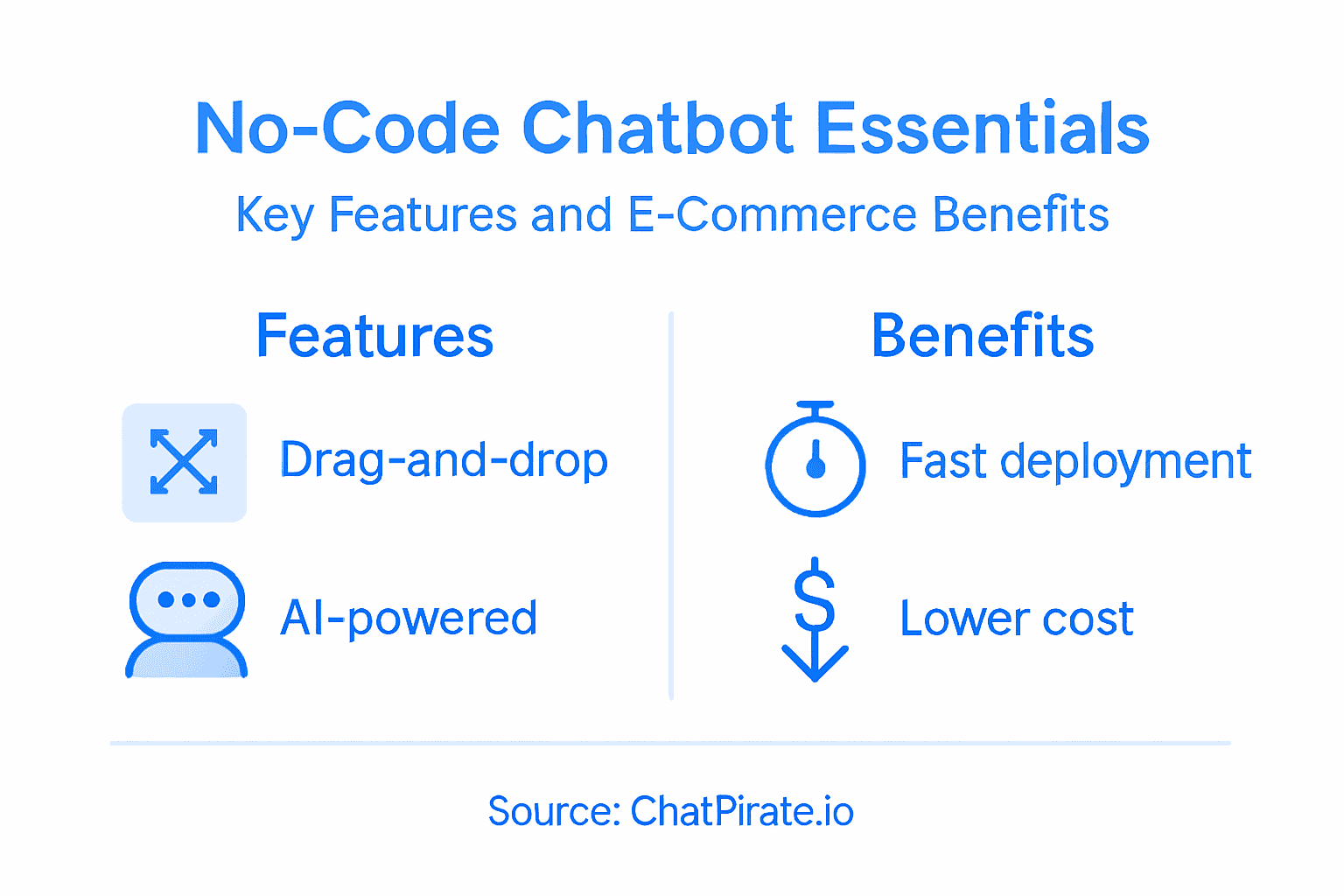
These platforms typically feature drag-and-drop builders, allowing users to construct complex conversational flows through graphical interfaces rather than writing intricate code. By utilizing pre-configured logic blocks, templates, and AI-powered natural language understanding, non-technical team members can design interactive chatbots that understand user intent and provide intelligent responses. The technology transforms chatbot development from a specialized coding task into an accessible design process anyone can navigate.
The key components of no-code chatbot technology include visual workflow builders, machine learning integrations, and seamless connectivity with existing business systems. E-commerce managers can now rapidly prototype customer support bots, sales assistants, and interactive guides without extensive technical expertise. These platforms support multiple communication channels, enabling businesses to deploy consistent conversational experiences across websites, mobile apps, and messaging platforms.
Here’s a summary of key no-code chatbot features and their business benefits:
| Feature | What It Does | Business Impact |
|---|---|---|
| Visual workflow builder | Allows intuitive conversation design | Enables non-technical teams |
| AI-powered NLP | Understands user questions accurately | Improves customer satisfaction |
| Multi-channel deployment | Deploy across web/app/messaging platforms | Delivers consistent experience |
| Pre-built templates | Jumpstarts bot creation | Reduces development time |
| Seamless integrations | Connects to business systems | Streamlines operations |
Pro tip: Start with a simple customer support bot and progressively add complexity as you understand your audience’s interaction patterns.
How No-Code Chatbots Actually Work
No-code chatbots function through an intelligent blend of visual design tools and advanced artificial intelligence technologies. At the heart of their operation is natural language processing (NLP), which enables these platforms to understand and interpret user inputs with remarkable precision. Unlike traditional coding approaches, these systems use machine learning models trained on diverse conversational examples to recognize user intent and generate appropriate responses.
The technical architecture of no-code chatbots involves several sophisticated components. First, users design conversation flows using intuitive drag-and-drop interfaces that map potential user queries to specific response pathways. Machine learning algorithms then analyze these predefined workflows, learning to match incoming messages with the most relevant conversation branches. This approach allows non-technical professionals to create complex conversational experiences by visually connecting interaction nodes, conditional logic blocks, and response templates.
Deep machine learning techniques power the chatbot’s ability to maintain contextual understanding throughout multi-turn conversations. By employing advanced session management and intent recognition technologies, these platforms can track conversation history, remember previous interactions, and provide more nuanced, contextually relevant responses. E-commerce managers can customize these bots to handle specific scenarios like product inquiries, order tracking, and customer support, effectively creating intelligent digital assistants tailored to their unique business needs.
Pro tip: When building your first no-code chatbot, start with a small set of clearly defined user intents and gradually expand its capabilities based on actual interaction data.
Popular Use Cases for Online Businesses
No-code chatbots have revolutionized digital interactions across multiple online business domains, offering versatile solutions for critical operational challenges. Businesses leverage these intelligent tools to streamline customer engagement, automate support processes, and drive sales through personalized interactions. From e-commerce platforms to digital service providers, these advanced conversational interfaces have become essential for delivering exceptional customer experiences without requiring extensive technical infrastructure.
In the e-commerce landscape, chatbots serve multiple strategic functions. They excel at lead generation by automatically qualifying website visitors through intelligent conversational forms, scheduling product demonstrations, and capturing critical customer information. Customer support chatbots dramatically reduce response times by providing instant answers to frequently asked questions, handling product returns, and troubleshooting common issues. Additionally, these AI-powered assistants can deliver personalized product recommendations based on user browsing history and preferences, effectively acting as virtual sales representatives that work around the clock.

Marketing and feedback collection represent another powerful use case for no-code chatbots. By engaging customers in interactive conversations, these tools can gather valuable insights, conduct surveys, and collect detailed feedback about products and services. They enable businesses to understand customer sentiment, identify improvement areas, and create more targeted marketing strategies. The ability to provide 24/7 support while maintaining a consistent brand voice makes these chatbots an invaluable asset for online businesses seeking to enhance customer satisfaction and operational efficiency.
Pro tip: Choose a no-code chatbot platform that offers robust analytics to continuously track and improve your conversational workflows based on real user interactions.
Comparing No-Code vs. Coded Chatbots
The fundamental difference between no-code and coded chatbots lies in their development approach and accessibility. No-code chatbots empower business users with visual interfaces that allow rapid deployment without deep programming knowledge, while traditional coded chatbots require extensive software development skills. Chatbot development technologies have evolved to democratize artificial intelligence solutions, making sophisticated conversational tools available to a broader range of professionals.
From a technical perspective, coded chatbots offer granular customization and complex logic implementations that require professional software engineering expertise. Developers can create intricate conversational flows, integrate advanced machine learning algorithms, and build highly specialized interaction models. Conversely, no-code chatbots provide pre-built templates, drag-and-drop interfaces, and user-friendly configuration options that enable rapid prototyping and deployment without writing a single line of code. These platforms typically include intuitive visual workflows, pre-configured AI models, and seamless integrations with existing business systems.
The key trade-offs between no-code and coded chatbots center around flexibility, development speed, and technical complexity. No-code solutions excel in quick implementation, lower development costs, and accessibility for non-technical teams. Coded chatbots shine in scenarios demanding highly specialized interactions, complex backend integrations, and custom machine learning models. For most e-commerce businesses, no-code platforms offer sufficient flexibility and intelligence to meet customer engagement requirements without the significant time and resource investments associated with custom-coded solutions.
Below is a comparison of no-code vs. coded chatbots for e-commerce:
| Aspect | No-Code Chatbots | Coded Chatbots |
|---|---|---|
| Setup Speed | Fast deployment | Slow, requires coding |
| Required Expertise | None, uses visual tools | High, needs software engineers |
| Customization Level | Limited to platform options | Fully customizable logic |
| Scalability | Good for SMBs | Optimal for large enterprises |
Pro tip: Start with a no-code chatbot solution and plan for potential custom development only after thoroughly testing and understanding your specific interaction requirements.
Costs, Pitfalls, and What to Consider
Implementing a no-code chatbot requires careful evaluation of multiple financial and operational factors that extend beyond initial deployment costs. Chatbot implementation strategies demand a comprehensive understanding of potential expenses, including platform subscriptions, integration costs, and ongoing maintenance requirements. While no-code solutions typically offer lower upfront investments compared to custom-coded alternatives, businesses must still budget for premium features, advanced AI capabilities, and potential scalability upgrades.
Several critical pitfalls can undermine the effectiveness of no-code chatbot implementations. One significant challenge involves managing user expectations and designing conversational flows that genuinely solve customer problems. Generic, poorly constructed chatbots can frustrate users and potentially damage brand perception. Businesses must invest time in creating nuanced conversation paths, training AI models with comprehensive datasets, and continuously refining interaction models based on real-world user feedback. Additionally, data privacy and security represent crucial considerations, requiring careful selection of platforms that offer robust compliance mechanisms and transparent data handling practices.
The decision to implement a no-code chatbot should involve a strategic assessment of specific business requirements, technological capabilities, and long-term engagement goals. Key evaluation criteria include integration complexity with existing systems, required customization levels, anticipated user interaction volumes, and potential return on investment. Small to medium-sized e-commerce businesses often benefit most from no-code solutions, which provide a flexible, cost-effective approach to enhancing customer support and engagement without substantial technical overhead. Larger enterprises with complex interaction models might require hybrid approaches that combine no-code platforms with custom development strategies.
Pro tip: Conduct a thorough pilot test of your no-code chatbot with a limited user group to identify potential interaction gaps and refine your conversational design before full-scale deployment.
Unlock the Full Potential of No-Code Chatbots for Your E-Commerce Business
The article highlights the challenges many e-commerce managers face when trying to quickly deploy sophisticated chatbots without coding knowledge. Key pain points include designing intuitive conversational flows, integrating AI-powered natural language processing, and delivering a seamless customer experience across multiple channels. The goal is to reduce operational costs while enhancing support speed and customer satisfaction — all while avoiding the complexity and expense of traditional development.
At ChatPirate.io, we offer a powerful SaaS platform built exactly for these needs. Our no-code AI chatbots are easy to customize with your existing website content, documents, and knowledge bases so you can provide instant, accurate responses 24/7. With simple integration options for WordPress, Shopify, Wix, and Webflow, your team can launch chatbots rapidly without technical expertise. The platform includes essential features like human handoff, lead generation tools, and analytics dashboards to continuously optimize your conversational workflows. By choosing ChatPirate, you gain a scalable solution designed to grow with your business while keeping customer satisfaction and operational efficiency front and center.
Ready to transform your e-commerce customer experience today Explore ChatPirate’s no-code chatbot solution and start building smarter conversations that convert.
Take the step that hundreds of online businesses trust to innovate customer support and engagement. Visit ChatPirate.io now and launch your first AI chatbot without writing a single line of code.
Frequently Asked Questions
What is a no-code chatbot?
A no-code chatbot is a conversational interface that allows users to create chatbots without needing programming skills, utilizing visual design tools and pre-built components.
What are the benefits of using no-code chatbots for e-commerce?
No-code chatbots enable rapid deployment, lower costs, and empower non-technical team members to improve customer engagement, automate support, and streamline operations.
How do no-code chatbots understand user intent?
No-code chatbots use artificial intelligence and natural language processing (NLP) to interpret user inputs accurately, allowing them to engage in meaningful conversations.
What should businesses consider when implementing a no-code chatbot?
Businesses should evaluate integration complexity, required customization, user interaction volumes, and ongoing maintenance needs when choosing a no-code chatbot solution.
Leave a Reply