
Choosing the right chatbot for your e-commerce platform can feel overwhelming when every customer interaction matters. With so many technical options available, it’s tough to know which type actually delivers reliable answers or creates the smart, personalized conversations shoppers expect. The difference between a simple rule-based model and an advanced AI chatbot goes far beyond technology—it impacts your customers’ experience and your team’s workload.
You will discover practical strategies for matching chatbot features to your business needs, along with real-world examples showing how these tools tackle everyday challenges. Whether you want instant responses to frequently asked questions or conversations that feel tailored to each user, this list breaks down what works and why. Get ready to identify solutions that can improve support, drive sales, and build customer trust right from the first chat.
Table of Contents
- 1. Rule-Based Chatbots For Simple FAQs
- 2. AI-Powered Chatbots For Smart Conversations
- 3. Hybrid Chatbots Combining AI And Rules
- 4. Contextual Chatbots For Personalized Experiences
- 5. Voice-Activated Chatbots For Hands-Free Support
- 6. Transactional Chatbots For Seamless Purchases
- 7. Support Chatbots With Human Handoff Features
Quick Summary
| Key Message | Explanation |
|---|---|
| 1. Utilize Rule-Based Chatbots for FAQs | They are effective for common inquiries like shipping, returns, and basic troubleshooting, offering quick, standardized responses. |
| 2. Implement AI-Powered Chatbots for Complex Interactions | These chatbots enhance customer service by understanding context, processing natural language, and personalizing interactions based on user data. |
| 3. Invest in Hybrid Chatbots for Flexibility | Combining rule-based and AI components allows for efficient handling of both simple and complex customer queries. |
| 4. Focus on Contextual Intelligence for Personalization | Contextual chatbots can recall user preferences and past interactions, making shopping experiences more tailored and engaging. |
| 5. Enable Human Handoff for Comprehensive Support | Implementing this feature will ensure that more complex inquiries are seamlessly transitioned to human agents for better customer experience. |
1. Rule-Based Chatbots for Simple FAQs
Rule-based chatbots represent the most straightforward approach to automated customer support for e-commerce platforms, specializing in handling predictable, repetitive questions with precision and reliability. These chatbots operate using predefined decision trees and explicit programming rules, making them ideal for organizations seeking consistent and accurate responses to common customer inquiries.
Unlike advanced AI models, rule-based chatbots work through a systematic if-then logic that matches user queries against a predefined set of rules. Chatbot interaction patterns demonstrate that these systems excel at delivering quick, accurate responses for structured, predictable questions such as shipping policies, return procedures, and product availability.
E-commerce managers can leverage rule-based chatbots effectively by carefully mapping out common customer questions and creating precise response pathways. This approach ensures that customers receive instant, standardized information without the complexity of machine learning algorithms. Typical applications include handling frequently asked questions about order status, product specifications, pricing, and basic troubleshooting.
The key advantage of rule-based chatbots lies in their predictability and control. Businesses can precisely define every potential interaction, reducing the risk of inappropriate or incorrect responses. They are particularly useful for domains with clearly defined information sets where variations in customer questions are limited.
Potential Use Cases:
- Order tracking inquiries
- Shipping and delivery information
- Basic product specification queries
- Return and exchange policy explanations
- Account management support
Key Benefits:
- Fast and accurate responses
- Lower implementation complexity
- Reduced customer support workload
- Consistent information delivery
- Cost effective solution for simple interactions
Pro tip: Design your rule-based chatbot by conducting a thorough analysis of your customer support tickets to identify the most frequently asked questions and create precise, helpful response scripts.
2. AI-Powered Chatbots for Smart Conversations
AI-powered chatbots represent a revolutionary leap in customer interaction technology, offering e-commerce managers an intelligent solution for handling complex and nuanced customer conversations. These advanced chatbots go far beyond simple predefined responses, utilizing sophisticated machine learning algorithms to understand context, interpret intent, and deliver personalized interactions.
Advanced conversational AI technologies enable these chatbots to simulate human-like dialogues by processing natural language with remarkable precision. Unlike rule-based systems, AI-powered chatbots can understand subtle variations in customer queries, adapt responses in real time, and learn from each interaction to continuously improve their communication strategies.
For e-commerce platforms, AI-powered chatbots offer transformative capabilities in customer support and engagement. They can handle complex inquiries about product recommendations, troubleshoot technical issues, process returns, and even provide personalized shopping guidance based on individual customer preferences and purchase history.
Key Capabilities of AI-Powered Chatbots:
- Contextual understanding of customer queries
- Dynamic response generation
- Personalized interaction based on user history
- Multilingual support
- Sentiment analysis
- Continuous learning and improvement
Practical Implementation Strategies:
- Start with clear training data representing your customer interactions
- Define specific conversation flows and potential scenarios
- Integrate with existing customer relationship management systems
- Regularly monitor and refine chatbot performance
- Ensure smooth handoff to human agents when needed
Benefits for E-commerce Managers:
- 24/7 customer support availability
- Reduced operational support costs
- Improved customer satisfaction
- Scalable customer interaction management
- Data driven insights into customer needs
Pro tip: Implement a continuous feedback loop where your AI chatbot learns from both successful and unsuccessful interactions, using machine learning algorithms to progressively enhance its conversational intelligence.
3. Hybrid Chatbots Combining AI and Rules
Hybrid chatbots represent a sophisticated approach to customer support technology, strategically blending the predictability of rule-based systems with the adaptive intelligence of artificial intelligence. These innovative solutions offer e-commerce managers a powerful tool that can handle both straightforward inquiries and complex conversational scenarios with remarkable efficiency.
Hybrid chatbot architectures combine the structured precision of predefined rules with advanced machine learning capabilities, creating a flexible communication platform that adapts to diverse customer interaction needs. By integrating two distinct technological approaches, these chatbots deliver a more robust and intelligent customer service experience.
The core strength of hybrid chatbots lies in their dual-layer processing system. For standard, frequently asked questions, the rule-based component provides instant, accurate responses. When confronted with more nuanced or context-dependent queries, the AI-powered module seamlessly takes over, analyzing language patterns and generating contextually appropriate answers.
Key Components of Hybrid Chatbots:
- Predefined rule-based response system
- Machine learning natural language processing
- Adaptive conversation management
- Seamless human agent transition
- Continuous performance optimization
Strategic Implementation Advantages:
- Faster initial response times
- Higher accuracy across query types
- Reduced operational support costs
- Enhanced customer satisfaction
- Scalable interaction management
Recommended Configuration Strategies:
- Define clear boundaries between rule-based and AI components
- Develop comprehensive training datasets
- Implement robust fallback mechanisms
- Regularly update response libraries
- Monitor and analyze interaction performance
Pro tip: Design your hybrid chatbot with a progressive learning architecture that continuously refines its AI module by analyzing successful human agent interventions and user interaction patterns.
4. Contextual Chatbots for Personalized Experiences
Contextual chatbots represent the cutting edge of personalized digital interaction, transforming how e-commerce platforms engage with customers by delivering highly tailored conversational experiences. These intelligent systems go beyond standard question-answering by understanding and remembering user context, preferences, and interaction history.
Contextual interaction mechanisms allow these chatbots to create dynamic dialogue flows that adapt in real time based on individual user characteristics. By analyzing past interactions, purchase history, browsing behavior, and current session details, contextual chatbots can provide remarkably precise and relevant recommendations.
For e-commerce managers, contextual chatbots offer an unprecedented opportunity to create individualized customer journeys. Instead of generic responses, these chatbots can craft responses that feel like they are coming from a knowledgeable personal shopping assistant who understands each customer’s unique needs and preferences.
Core Contextual Intelligence Features:
- User profile tracking
- Conversation history retention
- Intent recognition
- Personalized product recommendations
- Adaptive communication style
- Sentiment analysis
Strategic Implementation Benefits:
- Enhanced customer engagement
- Increased conversion rates
- More intuitive shopping experiences
- Reduced customer support response times
- Higher customer satisfaction scores
Technical Design Considerations:
- Integrate comprehensive user data sources
- Develop robust machine learning models
- Create flexible conversation management systems
- Implement privacy protection mechanisms
- Enable continuous learning algorithms
Pro tip: Design your contextual chatbot with granular user segmentation strategies, allowing for hyper personalized interactions that feel genuinely tailored to individual customer preferences and behaviors.
5. Voice-Activated Chatbots for Hands-Free Support
Voice-activated chatbots represent a revolutionary approach to customer support, enabling users to interact with e-commerce platforms through natural speech commands without requiring manual typing or navigation. These intelligent systems leverage advanced speech recognition technologies to deliver seamless, accessibility-focused support experiences.
Voice interface technologies transform how customers interact with digital platforms by converting spoken language into actionable requests. By integrating sophisticated natural language processing algorithms, voice-activated chatbots can understand context, interpret user intent, and generate appropriate responses across multiple languages and accents.
E-commerce managers can implement voice chatbots to provide customers with hands-free support that enhances accessibility and convenience. These systems are particularly valuable for multitasking users, individuals with mobility challenges, or those seeking quick information while engaged in other activities.
Core Voice Chatbot Capabilities:
- Speech to text conversion
- Natural language understanding
- Multilingual support
- Context aware responses
- Accent recognition
- Real time interaction processing
Strategic Implementation Benefits:
- Enhanced user accessibility
- Reduced manual interaction friction
- Improved customer experience
- Support for diverse user needs
- Faster query resolution
- Expanded customer engagement channels
Technical Design Considerations:
- Robust speech recognition algorithms
- Advanced natural language processing
- Noise cancellation technologies
- Secure voice authentication
- Continuous machine learning updates
- Privacy protection mechanisms
Pro tip: Design your voice chatbot with multiple accent training datasets and implement sophisticated noise reduction algorithms to ensure consistent performance across diverse user environments.
6. Transactional Chatbots for Seamless Purchases
Transactional chatbots represent a groundbreaking approach to e-commerce interactions, enabling customers to complete entire purchasing journeys directly through conversational interfaces. These sophisticated systems transform traditional shopping experiences by allowing users to browse, select, and purchase products without leaving the chat environment.
Transactional chatbot architectures integrate advanced natural language processing with secure payment gateways, creating a seamless and intuitive purchasing workflow. By combining real-time product information, personalized recommendations, and instant transaction processing, these chatbots significantly reduce friction in the online shopping experience.
E-commerce managers can leverage transactional chatbots to streamline customer purchasing journeys, offering an interactive and conversational alternative to traditional website navigation. These systems intelligently guide customers through product selection, answer queries, provide personalized recommendations, and complete secure transactions within a single conversational interface.
Key Transactional Chatbot Features:
- Secure payment gateway integration
- Real-time product information retrieval
- Personalized product recommendations
- Instant order confirmation
- Multi payment method support
- Automated order tracking
Strategic Implementation Benefits:
- Reduced cart abandonment rates
- Enhanced customer engagement
- Faster purchase completion times
- Lower customer support workload
- Improved conversion metrics
- Seamless omnichannel experience
Technical Design Considerations:
- Robust security protocols
- Scalable transaction processing
- Smooth human agent handoff
- Cross platform compatibility
- Machine learning powered recommendations
- Privacy and data protection
Pro tip: Design your transactional chatbot with progressive complexity, starting with basic purchase workflows and gradually introducing more sophisticated features based on user interaction data and feedback.
7. Support Chatbots with Human Handoff Features
Support chatbots with human handoff capabilities represent the pinnacle of intelligent customer service technology, bridging the gap between automated efficiency and personalized human interaction. These advanced systems intelligently detect when a conversation requires nuanced understanding or emotional intelligence that artificial intelligence cannot fully provide.
Human agent escalation strategies enable chatbots to seamlessly transition complex customer inquiries to human support representatives. By analyzing conversation complexity, user sentiment, and interaction patterns, these chatbots determine the optimal moment to introduce human intervention.
E-commerce managers can implement human handoff features to ensure customers always receive comprehensive support, regardless of the complexity of their inquiries. These systems combine the speed and availability of AI chatbots with the empathy and problem solving skills of human agents, creating a robust and flexible customer support ecosystem.
Key Handoff Mechanism Components:
- Sentiment analysis detection
- Conversation complexity evaluation
- Smooth transition protocols
- Context preservation
- Real time agent availability checking
- Intelligent routing systems
Strategic Implementation Benefits:
- Enhanced customer satisfaction
- Reduced support resolution times
- Balanced automation and personalization
- Improved first contact resolution rates
- Lower customer frustration levels
- Comprehensive support coverage
Technical Design Considerations:
- Develop clear escalation triggers
- Create comprehensive agent training programs
- Implement robust integration frameworks
- Ensure secure information transfer
- Design intuitive user interfaces
- Enable continuous performance monitoring
Pro tip: Configure your human handoff system with granular triggers that consider multiple interaction factors, ensuring smooth transitions that feel natural and responsive to customer needs.
Below is a comprehensive table summarizing the different types of chatbots for e-commerce platforms discussed throughout the article.
| Type of Chatbot | Description | Key Features and Benefits |
|---|---|---|
| Rule-Based Chatbot | Operates based on predefined rules and decision trees; ideal for predictable and structured queries. | Fast and reliable responses, lower implementation complexity, reduced workload, cost effective for simple FAQs. |
| AI-Powered Chatbot | Utilizes machine learning to understand context and generate adaptive responses; suitable for complex conversations. | 24/7 support, personalized interactions, scalable management, sentiment analysis, continuous learning. |
| Hybrid Chatbot | Combines rule-based precision with AI adaptability for diverse query management. | Faster responses, improved accuracy, reduced costs, higher customer interaction efficiency. |
| Contextual Chatbot | Engages users based on interaction history and preferences for a personalized experience. | Enhanced engagement and satisfaction, intuitive shopping, real-time adaptive recommendations. |
| Voice-Activated Chatbot | Allows hands-free interaction via speech recognition for accessibility-focused support. | Multilingual support, accent recognition, faster query handling, improved usability for multitasking users. |
| Transactional Chatbot | Facilitates purchases directly through a chat interface, streamlining the shopping experience. | Secure transactions, personalized product suggestions, instant order handling, reduced cart abandonment. |
| Support Chatbot with Human Handoff | Detects complex or sensitive queries and smartly transitions them to human agents. | Balanced automation and personalization, improved resolution rates, user-friendly handoff protocols. |
Unlock Powerful E-commerce Support with AI-Powered Chatbots
Managing diverse customer inquiries from simple FAQs to complex transactional processes can be overwhelming for any e-commerce manager. The article highlights common challenges like delivering instant, accurate responses while maintaining personalized experiences and seamless human handoff when needed. These pain points underscore the necessity of leveraging rule-based, AI-powered, and hybrid chatbot systems that can adapt, learn, and scale with your business needs.
That is where ChatPirate steps in. Our SaaS platform offers customizable AI chatbots designed specifically for e-commerce businesses seeking to reduce operational costs, improve customer satisfaction, and boost engagement. Whether you need fast FAQ handling, smart conversation management, or secure transactional chatbots, ChatPirate makes deployment effortless with integrations for Shopify, WordPress, Wix, and more. Gain full control over chatbot behavior while benefiting from seamless human handoff, real-time analytics, and personalized chat experiences that turn visitors into loyal customers.
Ready to transform your customer support and scale smarter? Experience the future of e-commerce engagement now with ChatPirate’s AI chatbots.
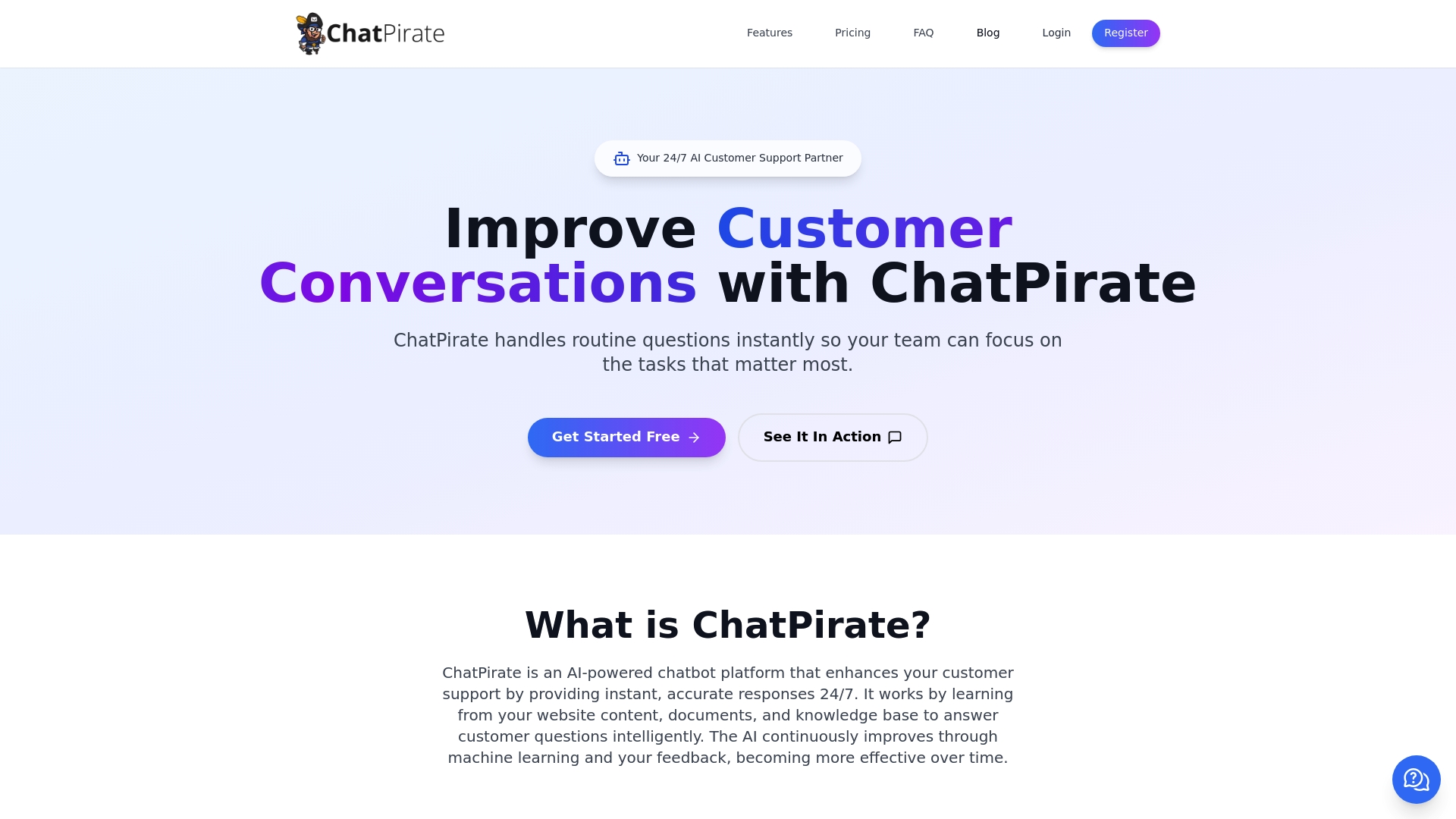
Discover how our intelligent chatbots solve your toughest support challenges fast. Visit ChatPirate.io today to get started and see the difference 24/7 automated customer interaction can make for your business.
Frequently Asked Questions
What are rule-based chatbots, and how can they help my e-commerce business?
Rule-based chatbots are designed to handle simple, repetitive questions using predefined rules. To implement them, identify common customer inquiries and create specific responses to improve efficiency and customer satisfaction.
How do AI-powered chatbots enhance customer interaction in e-commerce?
AI-powered chatbots use advanced machine learning to understand context and deliver personalized interactions. Start by training your chatbot with historical customer data to help it provide more relevant responses and improve user engagement over time.
What should I consider when implementing hybrid chatbots?
Hybrid chatbots combine rule-based systems with AI capabilities, allowing them to handle both simple and complex inquiries. Consider defining clear boundaries between the two systems and continually monitor performance to optimize interactions based on customer needs.
How can contextual chatbots improve the customer experience?
Contextual chatbots utilize user data and interaction history to provide tailored conversations. To enhance engagement, integrate user profile tracking and intent recognition to deliver personalized product recommendations and support.
What are the key benefits of implementing voice-activated chatbots?
Voice-activated chatbots allow customers to interact through natural speech, improving accessibility and convenience. To maximize their impact, ensure your system supports diverse accents and languages, enabling hands-free support that caters to a broader audience.
How do support chatbots with human handoff features work?
Support chatbots with human handoff capabilities can escalate more complex inquiries to human representatives. Develop clear triggers for handoff based on sentiment and conversation complexity to ensure smooth transitions that enhance customer satisfaction.
Leave a Reply